What is the standard rejection rate?
Rejected share refers to the share that your miner failed to submit to the mining pool due to network fluctuations and other factors.
The rejection rate is the ratio of rejected shares to the total number of shares submitted by miners. And the lower the rejection rate, the more efficient the miner.
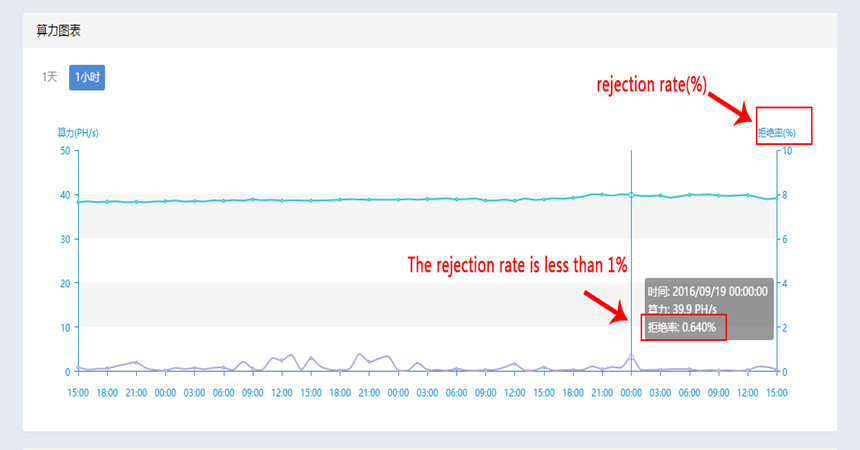
As long as the rejection rate is below 1%, it is normal. You can calculate the rejection rate as follows:
Rejection rate = (expired number + repetition number + other) / (received number + expired number + repetition number + other)
If the rejection rate is higher than 1%, it is recommended:
1. Shut down and restart the miner
If you have many miners on your mining farm, you can use the bulk tool APMinerTool to manage your miners.
The software download and tutorial link:
2. Check the network
If the rejection rate of all miners connected to the same router or switch is abnormal, it is recommended to check the entire network and replace the router or switch for testing.
If the rejection rate of a particular miner is abnormal, it is recommended to replace the network cable and network cable connector to the miner.
Rejected shares почему
Самый быстрый Ethereum /Ethash майнер с самой низкой комиссией
Отклоненные шары плохи, поскольку они представляют собой работу, которая не будет применена к нахождению блока блокчейна, и за них не будет оплачено.
Отклоненные шары обычно возникают, когда ваш компьютер был занят решением проблемы с криптовалютой, и он не предоставил результаты вовремя, чтобы засчитать их в монет обнаружения.
Имейте в виду, однако, что отклоненные шары неизбежны, особенно в любом майнинг пуле с более чем дюжиной пользователей. Это просто факт добычи криптовалюты.
Решения
- Скачайте майнер самой свежей версии. В ней исправлены все известные ошибки.
- Установите HWINFO и убедитесь, что у вас нет большого количества ошибок памяти GPU.
- Нажмите S. Посмотрите на неправильные шары ETH.
- Rejected Share чаще всего происходит из-за слишком большого разгона памяти и / или неправильных таймингов видеопамяти.
- Если вы получаете неверные шары, то уменьшите на 10 МГц частоту памяти, перезапустите и посмотрите снова через 24 часа.
- Перепрошейте проблемную карту другими таймингами
- Проверьте пинг интернет соединения до пула
Последняя версия — v15.0 MD5: 8A710D577798BF347FDB2C8A45129941 *Claymore’s Dual Ethereum AMD+NVIDIA GPU Miner v15.0 — Windows.zip (Скачать для Linux)
Пароль: claymore
Проект Claymore представляет самые последние версии программного обеспечения (исправляет все ошибки и баги предыдущих версий)! Поэтому если у Вас старая версия, мы настоятельно советуем скачать последнюю версию Claymore’s по ссылкам ниже, так как с каждым выходом новой версии добыча Эфира становится выгоднее!
Последняя версия — v15.0 MD5: 8A710D577798BF347FDB2C8A45129941 *Claymore’s Dual Ethereum AMD+NVIDIA GPU Miner v15.0 — Windows.zip (Скачать для Linux)
Пароль: claymore
Ресурсы для разработчиков
- What is Ether? Read our FAQ
- Browse our source code on GitHub
- Read the documentation or wiki
- Learn Solidity
- See the latest data and network stats
- Download our logo assets
- Want to write about Ethereum? Press inquiries
- switch to the English language.
Note, when downloading the Claymore Miner, Windows may issue a warning, but if you used Claymore Dual Miner download link you can ignore this.
Disclaimer: This isn’t an official Claymores site. No binary files were affected. All rights belong to their respective owners. © 2018-2021
A Deep Dive Into Rejected Shares in Mining
If you’re new to the world of mining, you may have heard about something called “rejected shares” and wondered what it is. Rejected shares are essentially rejected work units that your miner creates because it has become disconnected from the blockchain network. The rejection rate of shares can be an essential indicator of how successful your mining operation is, so understanding why and how rejected shares happen is key to optimizing your mining experience.
Understanding Rejected Shares
Rejected shares are an unfortunate reality of mining. They are shares that were generated but could not be submitted to the mining pool due to network fluctuations or other factors. But what is a rejected share, and how do they affect your mining? Rejected shares occur when miner hardware is sending too quickly, meaning that the data is not correctly transmitted, and thus, it is returned back as rejected by the mining pool. This can be caused by a disconnection from the pool, hardware instability, and bad Internet connection, among many other reasons; Rejected shares can heavily hinder your mining process, resulting in fewer profits for you as a miner. Fortunately, there are steps you can take to reduce their presence and make sure that your profits remain on track.
Calculating the Rejection Rate
The rejection rate can be calculated by taking the total number of rejected shares divided by the total number of submitted shares. This provides an estimated figure for how many work units were rejected out of all those attempted by your miner. It’s important to note that different pools have different thresholds for rejecting work units so this figure may vary between pools depending on their specific requirements.
Reducing and Avoiding High Rejection Rates
With the increasing competition in the cryptocurrency space, it is becoming ever more critical for miners to ensure they are as efficient as possible. A great way to measure this efficiency is by looking at the miner’s rejection rate. The rejection rate measures the ratio of rejected shares from a miner relative to the total amount of shares submitted; a lower number means that more of their effort is being rewarded with actual Bitcoin rewards. This makes them much more competitive and will enable them to make bigger profits in the long run. It’s an important aspect to consider when choosing or investing in a miner and one that can have a big effect on profitability.
As long as the rejection rate is below 1%, it is normal
A rejection rate below 1% is entirely normal, but that doesn’t mean it can’t be improved. You can calculate your exact rejection rate by doing some simple math. First, you’ll need to know how many products were received and the number of expired repeated or other products. Then, just divide that total by the number of received products to get your rejection rate. By making sure you have accurate records, you can continually work towards improving this important metric and ensure your business remains successful.
If the rejection rate is higher than 1%, it is recommended that you investigate
If you’re dealing with a high rejection rate of over 1 percent when trying to mine, it’s essential to take the right steps to diagnose and solve the issue. Whether it be shutting down and restarting your miner, checking your network connection, or even replacing your router or switch entirely, there are multiple solutions available to investigate and hopefully rectify this problem. Taking the necessary steps to ensure your mining experience will be as successful as possible is an absolute must. Ensure you don’t miss out on any potential reward by leaving this issue unresolved.
Conclusion
High rejection rates in mining operations can significantly impede profitability as miners miss out on rewards from failed attempts at solving blocks on the blockchain network. Understanding why these rejections occur, as well as what steps you can take to reduce them, is key when it comes to optimizing your mining operations for maximum effectiveness and efficiency. By following the tips outlined in this blog post, miners should be able to minimize their rejected share rate and maximize their returns from their mining efforts!
FAQ
What are rejected shares in mining?
Rejected shares are essentially work units that your miner creates but are rejected because they became disconnected from the blockchain network. They are generated but couldn’t be submitted to the mining pool due to issues like network fluctuations, hardware instability, poor Internet connection, and other factors.
Why do rejected shares occur?
Rejected shares occur when the miner’s hardware is sending data too quickly, such that the data isn’t correctly transmitted and is subsequently rejected by the mining pool. They could also occur because of network fluctuations, hardware instability, and poor Internet connection, among other things.
How do rejected shares affect mining?
Rejected shares can significantly affect the efficiency and profitability of your mining operation. When a large number of your shares are rejected, it means that you’re missing out on potential rewards from mining pools. This, in turn, reduces your overall profits from mining.
How is the rejection rate calculated?
The rejection rate is calculated by dividing the total number of rejected shares by the total number of submitted shares. This figure might vary between mining pools due to their specific requirements and thresholds for rejecting work units.
What is a normal rejection rate in mining?
A rejection rate below 1% is usually considered normal in mining. However, even this can be improved through optimization and troubleshooting of your mining operation.
What should I do if my rejection rate is above 1%?
If your rejection rate is above 1%, it is recommended that you investigate the issue to diagnose and rectify it. Some recommended solutions include restarting your miner, checking your network connection, or even changing your router or switch.
How can I reduce my rejection rate?
You can reduce your rejection rate by continually monitoring your operation, ensuring your network connection is stable, optimizing your hardware, and using accurate records to work towards improving your operation’s efficiency.
Why is number of accepted and rejected shares different on minerstat and on pool?
The main difference is the way the shares are tracked, just like the hashrate shown on minerstat is reported by the miner, and not «average» or «current», which are calculated based on the amount of shares submitted, the number of shares shown as accepted or rejected on minerstat is what the mining client reports. You can read more about difference in hashrate reported on minerstat and on pool in this article.
Let’s explore the ways amounts of accepted and rejected shares are calculated on minerstat and on pools in more detail below.
On minerstat
On minerstat, the way we track the number of accepted and rejected shares is by checking what the mining client reports.
For instance, if the client’s been started 12 hours ago, the number of shares displayed on minerstat will be quite large, as it’s a summary of all the shares found in those 12 hours. However, if you have just restarted the client, the number of accepted shares might be very low, or even 0, as the client has found very little amount of shares (or even none, in case of 0 being displayed).
The miner reporting 0 accepted and 0 rejected shares right after its restart is also what’s causing the 0% efficiency being displayed. However, if the config is correct, and you’re mining successfully, for a short period of time that is nothing to worry about — the miner will find a share, submit it, and report as accepted (or rejected) which will then affect the efficiency shown. You can read more about mining efficiency in this article.
Note It is also worth noting that some miner applications verify the shares with calculations on CPU and in case of invalid share being found, don’t submit it to the pool, and as the pool doesn’t see it, so the number of rejected shares doesn’t grow. This behavior is typically optional and configurable by user.
On pools
Pools track the number of accepted and reject shares different to mining clients (and minerstat, as a result of that), and each pool has their preferred way of tracking these amounts.
As an example, Ethermine, one of the most popular ETC pools, reports the number of accepted, stale or rejected shares in the last hour. Ezil, another popular pool which we partner with, calculates and shows the average and current hashrates with the average including data for the last 3 hours.
Binance Pool doesn’t display the number of accepted and rejected shares at all, instead displaying the approximate hashrate calculated from shares and a percentage value of rejects it received.
Revolutionize your mining operation with minerstat
It’s easy and free to get started. Monitor, manage, and optimize your mining rigs with our powerful platform.