Blockchain Explorer Meaning
A blockchain explorer (or block explorer) is a software application that allows users to extract, visualize, and review blockchain network metrics, including vital information about crypto transactions, such as transaction history, wallet balances, transaction fees, etc. Block explorers are often accessed online via web browsers. Every blockchain has its own distinct block explorer, meaning that information about Bitcoin transactions can only be accessed via a Bitcoin block explorer. The Ethereum block explorers include EtherScan and Ethplorer, while the Bitcoin block explorers include Blockchain.com, Tokenview, and Blockchair, among others. The block explorer can be private or public, depending on the blockchain in question. Block explorers can be considered “browsers” and “search engines” for blockchains and cryptocurrencies. They can serve as an information hub, providing detailed analytics about individual blocks and addresses. They may also be useful in acquiring real-time charts and data about transaction status, hard forks, hash rates, etc.
Why Use a Block Explorer?
- Mempool size/status
- Block difficulty
- Average block size
- Average transaction fees
- Latest blocks
- Network hash rate
- Double-spend incidents
- The most significant transaction of the day
- The genesis block of the blockchain network
Market analysts use block explorers to monitor and evaluate wallet addresses, especially of crypto whales, to better understand buys and sells, and the potential for a market sentiment shift.
Stablecoin
Stablecoins are a type of cryptocurrency that is pegged or tied to another asset, such as fiat currencies or gold.
Fork
A fork refers to a change or update to a system’s underlying code or software. Forks in blockchain change the set of rules governing a cryptocurrency’s protocol.
Initial DEX Offering (IDO)
An Initial DEX Offering (IDO) is a crowdfunding method that enables blockchain projects to release their native coins or tokens through a decentralized exchange (DEX).
- English
- This page is available in English only
Copyright © Ledger SAS. All rights reserved. Ledger, Ledger Stax, Ledger Nano S, Ledger Vault, Bolos are registered trademarks of Ledger SAS
1 rue du Mail, 75002 Paris, France
Payment methods


Block Explorer
An application enabling a user to view details of blocks on a given blockchain. Also known as a blockchain browser.
What Is a Block Explorer?
Block explorers connect directly to a specific blockchain, such as Bitcoin or Ethereum. They allow the user to view and query individual blocks — providing visibility to anyone of the transactions or other actions made by holders of individual cryptocurrencies. Block explorers are a key part of cryptocurrency’s mission of transparency and decentralization, and the universal visibility of all transaction data is one of the key differentiations between cryptocurrency and conventional currencies.
There are a wide range of block explorers available online, with the most popular including Mempool, Bitaps, Blockstream, Multihash, Blockchain Info, and Bitupper Explorer.
Most include the same or similar information at a glance, focusing on the last blocks that have been added to the blockchain, and the blocks that are about to be added next.
Within each block, information is given on block height, the age of the block, the block reward, the identity of the user or pool of users who mined the block, the TX (or transaction list) showing the number of transactions in the block, and the transaction status — that is, whether a transaction is pending or confirmed. In order to explore specific blocks or transactions, the user of a block explorer must input a specific query. Most commonly this will be the TXID, or transaction hash — a hex sequence used to uniquely identify a specific transaction. While there are many block explorers on offer, relatively few of them support SegWit, the upgrade to the Bitcoin blockchain activated in 2017. SegWit-enabled block explorers include Bitaps, Apirone, Blockchair, Bitupper, Cryptoid Chainz, and Poolin Explorer.
What is Block Explorer and how to use it? Blockchain Explorer explained
If you are new to Bitcoin and Cryptocurrencies then by now you might have heard the term “Block Explorer”. Blockchain Explorers and its data might seem confusing at the beginning but once you master this tool you’ll know how effective it is in the cryptocurrency ecosystem. This article will help you understand what is Blockchain Explorer aka Block Explorer, how it works and how to use Block Explorers.
Before we get to know about Blockchain Explorer here are few things to know about cryptocurrencies and Blockchain in general. Nearly all Cryptocurrencies such as Bitcoin, Ethereum, Litecoin, Monero and many other altcoins out there relies on blockchain to conduct transactions.
Blockchain is a encryption technology and is an ever growing set of blocks that have a record of transaction data. Blockchains are immutable, distributed, decentralized and a secure digital ledger. As this digital information is accessible to anyone on the internet it becomes transparent and incorruptible. Anybody can check the balance of any public address and anyone can view any transaction details on the blockchain. How? By using block explorers.
What is Block Explorer?
Block explorer is a website or a tool that allows one to browse through blocks, view wallet addresses, network hashrate, transaction data and other key information on the blockchain. Block Explorer is simply a search tool. Just like how you use web browsers to browse through the Internet; block explorers allows one to browse the blockchain. They are search engines made specifically to search the blocks of a blockchain. Each and every cryptocurrency that relies on its own blockchain will also have its own block explorer. So you must use block explorers specific to that cryptocurrency. For example using Bitcoin block explorer, you’ll not be able explore the chain of Ethereum or Litecoin. For Ethereum you’ll need to use Ethereum block explorer and for Litecoin you have to use Litecoin explorer.
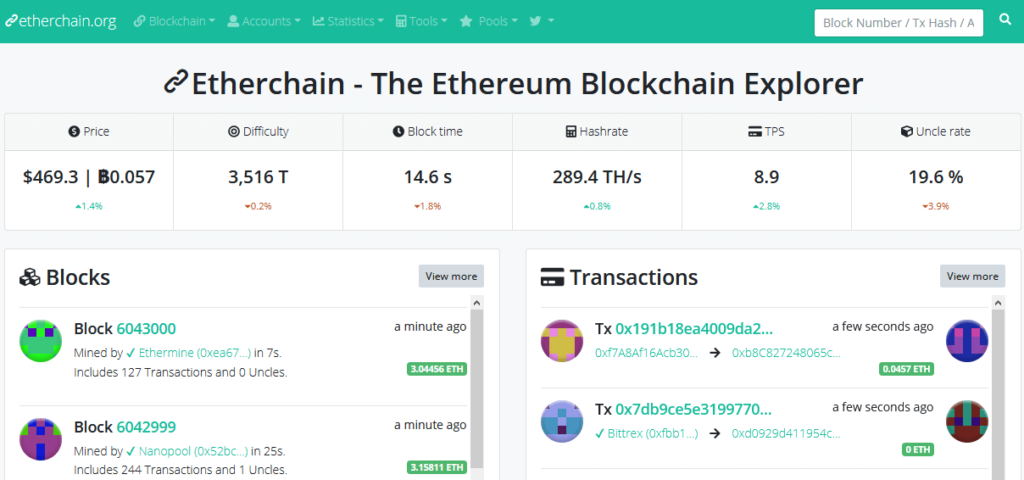
blockexplorer.com, blockcypher.com, btc.com and blockchain.com?
Just like how we have different web browsers and search engines to search the web; there are many blockchain explorers available for each coins. Either it could be official, community developed or maintained by any individual organizations. If you search “Block Explorer” in Google some of the sites that show up are blockexplorer.com, blockchain.com, blockcypher.com, mempool.space and btc.com.
These are some of the most popular Bitcoin blockchain explorers to find out information on the Bitcoin blockchain. They are most trusted and a well established tools to explore the real-time and historical information of the Bitcoin blockchain. Not just these but there are dozens of other block explorers out there for Bitcoin. In addition to exploring blocks some of these website offers useful tools such as wallet, stats, market data, widgets and API services. Here we’re not going to explain all of those additional features and we won’t go into the technical part on how these services fetches data from the blockchain. Instead we’ll explain the use of these services and we will show you some interesting things that you can do with block explorers.
How to use Block Explorer?
To explain things we’ll be using different services of Bitcoin block explorers. All explorers supply same information and once you understand these displayed data you’ll grasp block explorers of all other crypto currencies. Alright! Here are some of the common things that you can do with a block explorer.
Latest blocks and Latest transactions
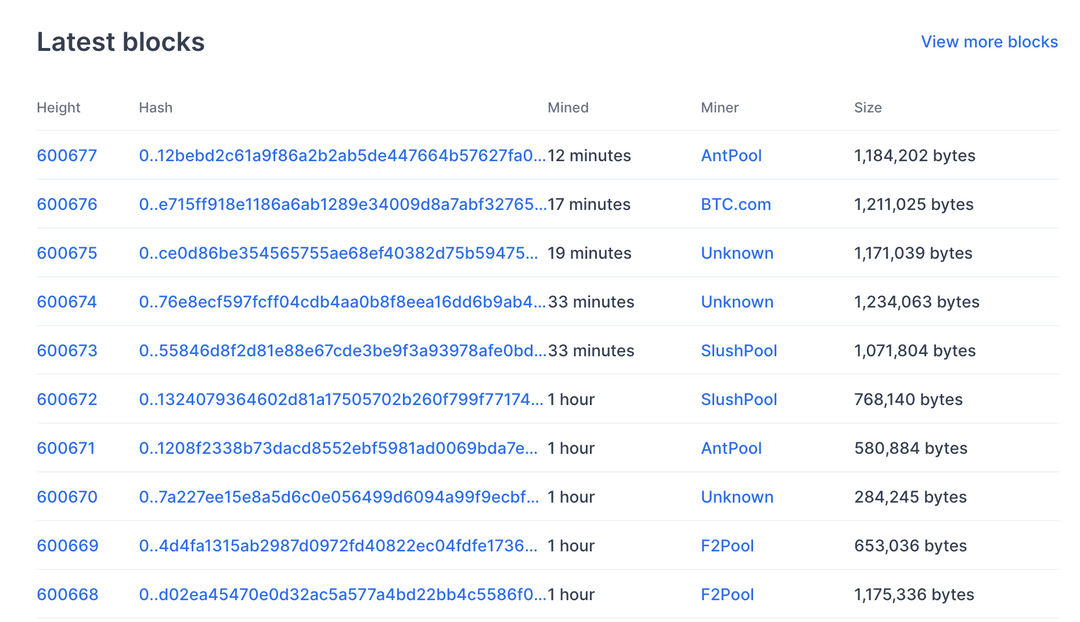
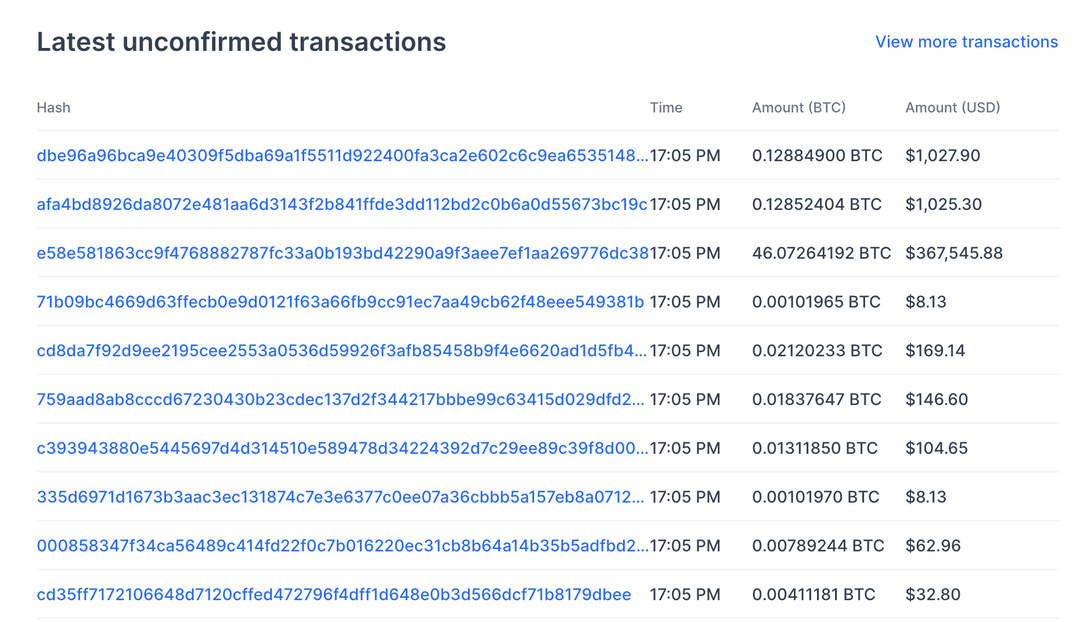
Whichever service it is the first thing that you’ll notice on the homepage is a list of most recent blocks and transactions.
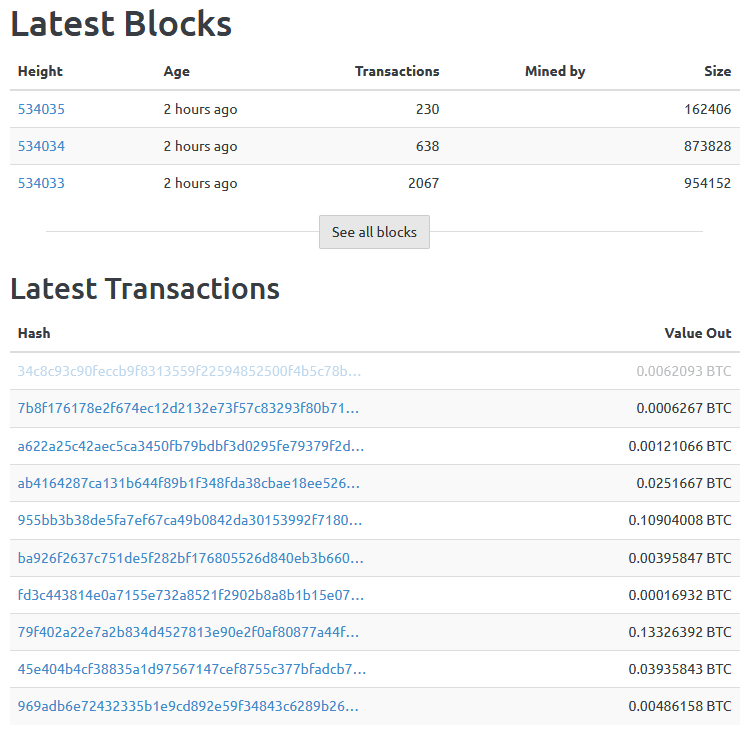
Once the miner solves a block it will get added to the blockchain and all these block explorers will update this information in real-time. Depending on the service this table displays the following information: block height, transaction hashes, age of the block, total number of transactions involved in a block, its size, block reward and relayed by / mined by.
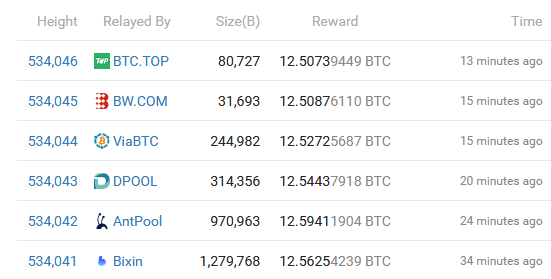
Finding blocks and viewing all of its transactions
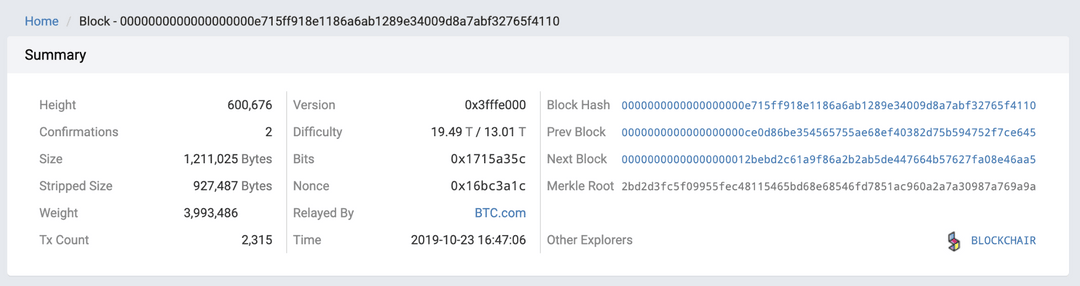
The block feed and transaction feed displayed on the homepage will be same across all explorers. However depending on the service the information displayed there will be limited. If you’d like to know more in-depth information then you’ll need to explore a particular block. You can either click the block feed link or you can input the block height number directly in the search field of the block explorer.
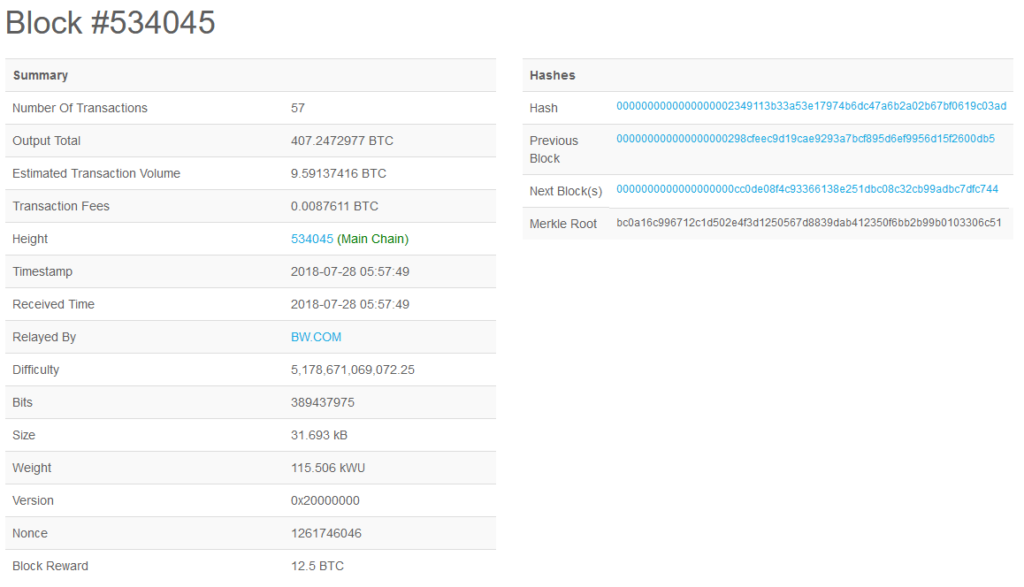
Now this page displays valuable information about a block that you are looking at specifically. When you explore a particular block most explores displays summary of the block and its transactions. Summary displays the following information:
- Number of transactions on the block
- Estimated transaction volume
- Transaction fees
- Total coins that was transacted
- Block reward, weight, size, version
- Who mined the block
- When the block was mined
- Nonce, Merkle Root
- Hash of the current block
- Hash of previous block and hash of next block
Followed by summary you’ll find information about each individual transactions that occurred in that particular block. This section displays Bitcoin addresses and the transaction ID of each single transactions. By looking at this you can easily understand how much Bitcoin was transacted, which address received it and from where it was sent from.
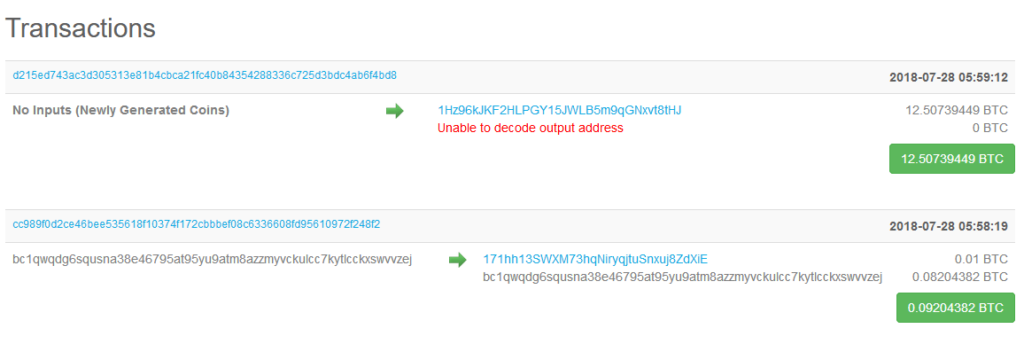
Exploring further
The data displayed in block explorers are interlinked and well connected to one another. For example from this transaction lists you can click on transaction id and view more details about that particular ID. It will display the block height in which the transaction took place, total number of confirmations and few other additional data. From there you can click on wallet address, navigate further and audit its transaction history and balance.
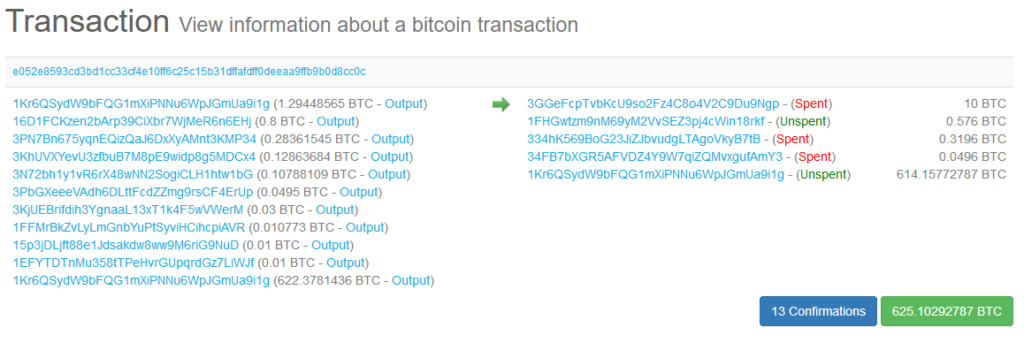
Network Status: Finding Hashrate, difficulty, fees and earnings
If you are Bitcoin miner then these are some information which you’ll find useful and start using it in your day to day mining routine. Not all explorers display this but some explorer like mempool.space and btc.com puts up more in-depth information about the current network.
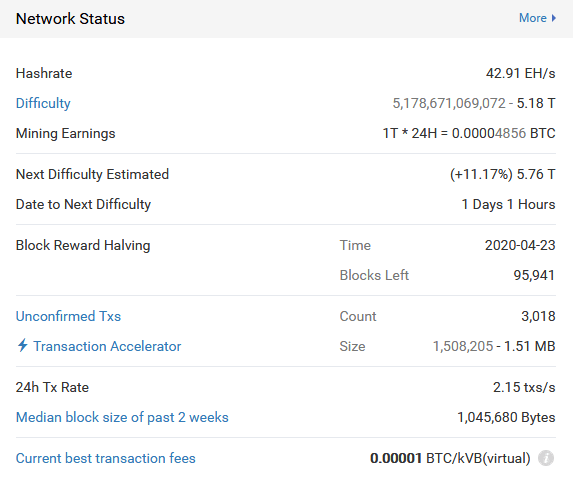
This section displays network hashrate, difficulty, next estimated difficulty and few other network specific information. For example the current hashrate is 42.91 EH/s which is equal to 42,910,000 TeraHash. These network data will help you to estimate your mining income and Bitcoin fees needed for a successful transaction.
Exploring Genesis block and viewing Rich list
Block explorer allows you to search any information about any block that you wish. You can even navigate to the first block that was mined in 2009. You can check the genesis block difficulty, wallet address that mined it and the reward. To find the genesis block just type 1 in search bar of block explorer and it will display the information of block height #1.
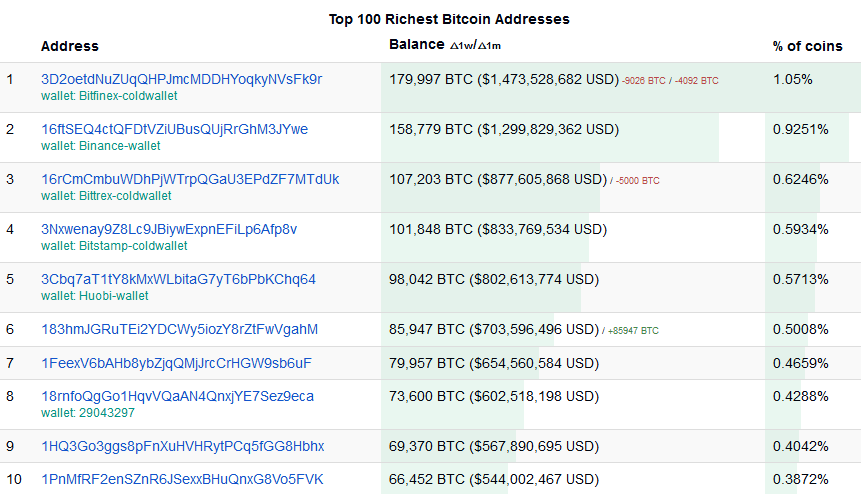
Ever wondered which Bitcoin address holds the most number of Bitcoins. Using block explorer you can check the most popular address by the number of outputs and the top 100 richest Bitcoin addresses. But do note that not all explorers provides this option and feature like this won’t be available on privacy coins like Monero.
In addition to this; few other information that you can examine using blockchain explorer are as follows: Viewing largest transaction, Mempool status, double spend incidents, blockchain size, total transaction per day, orphaned blocks and market capitalizations.
If you found this article useful then do share it and if you like to learn more about Bitcoin, Blockchain and Cryptocurrencies then do subscribe and follow us on Twitter.
What Are Block Explorers and How Do They Work?
Block explorers allow anyone to view transactions on a blockchain. Here’s how they work and how to access them.
Jun 16, 2023

Key Takeaways:
- A block explorer is an online blockchain browser or a tool for viewing a blockchain and checking transactions.
- Block explorers exist for Bitcoin and some altcoins.
- One of the most commonly searched forms of information on a block explorer is ‘recent blocks and transactions’.
- A Merkle tree summarises all the transactions in a block by producing a digital fingerprint of the entire set of transactions, thereby enabling users to verify whether or not a transaction was included in a block.
- Information about each individual transaction that happened in a particular block is also available.
What Are Block Explorers?
A block explorer is an online blockchain browser or a tool for viewing a blockchain and checking transactions. It provides information like the contents of an individual block, transaction history, and balance of addresses.
In other words, a block explorer is a search tool. Like how web browsers are used to browse through the internet, block explorers allow one to browse a blockchain.
Block Explorers for Bitcoin and the Most Popular Cryptos
Block explorers exist for Bitcoin and some altcoins. To search for the transactions of a particular coin, users must use the block explorer specific to that cryptocurrency.
Popular block explorers for Bitcoin:
Popular block explorers for Ethereum:
We use BTC’s blockexplorer.com as an example to introduce some of the most common functions that block explorers provide. Readers may use the link above to follow our steps to navigate the blockchain.
Using Block Explorers: Finding the Latest Blocks and Unconfirmed Transactions
One of the most commonly searched forms of information on a block explorer is ‘recent blocks and transactions’. Once a miner solves a block, it is added to the blockchain, and block explorers subsequently update this information:
Using Block Explorers: Finding Blocks and Viewing All of Their Transactions
For more in-depth information for each block, users can either click the block feed link or input the block height number directly in the search box of the block explorer.
There is also information about each individual transaction that happened in a particular block. Once a user clicks into an individual transaction, its transaction ID (TXID) and the associated Bitcoin addresses are displayed. Reviewing this usually provides how many bitcoins were transacted, which address received them, and from where.
What Are Merkle Trees and Merkle Roots?
Here’s a brief introduction to what a Merkle root is and how it relates to a Merkle tree.
Merkle Trees
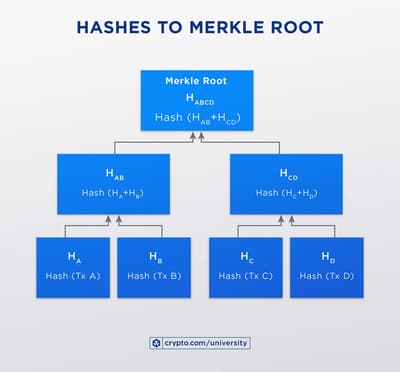
In Bitcoin’s blockchain system, multiple transactions exist within a block. A Merkle tree summarises all the transactions in a block by producing a digital fingerprint of the entire set of transactions, thereby enabling users to verify whether or not a transaction was included in a block.
Why Is It Called a Tree?
Technically, a Merkle tree is a tree structure constructed by hashing paired data (the leaves), then pairing and hashing the results until a single hash remains: the Merkle root. A Merkle tree is constructed from the bottom up, starting with the hashes of individual transactions (i.e., the transaction IDs). Merkle trees in Bitcoin use a double SHA-256.
Each leaf node is a hash of transactional data, and each non-leaf node is a hash of its previous hashes. Merkle trees are binary and therefore require an even number of leaf nodes. If the number of transactions is odd, the last hash will be duplicated once to create an even number of leaf nodes.
Understanding How Merkle Trees Work
For example, imagine a block with four transactions: A, B, C, and D.
The Merkle tree is:
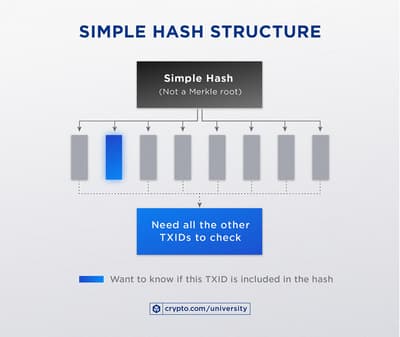
One idea to create a unique fingerprint for all TXIDs is concatenating all TXIDs and hashing them. However, to check whether a TXID is a part of the hash, all the other TXIDs need to be known, too.
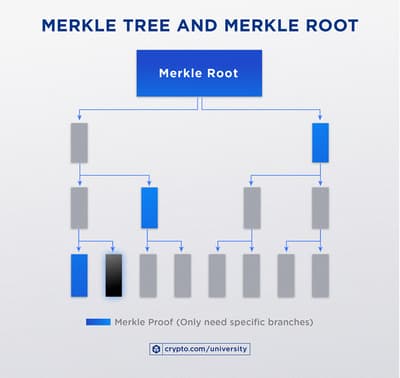
However, with a Merkle tree, to check that a TXID is part of the Merkle root, only some of the hashes along the path of the tree need to be known. As a result, using a Merkle root as a fingerprint for the block header can indicate if a transaction exists in a block without having to know every other TXID in the block.
Using Block Explorers to Explore Further
Each piece of data displayed in block explorers is interlinked and well connected to the others. For example, from the transaction list, users can click on each transaction ID to view more details about that transaction.
The list displays the block height in which the transaction took place, the total number of confirmations, and a few other additional data points. From there, users can click on the wallet address, navigate further, and check its transaction history and balance.
Final Words on Block Explorers
Block explorers are a key element of the trustless and decentralised nature of blockchain and cryptocurrency: anyone can publicly check which transactions were verified when. Whether new to crypto and Web3 or a seasoned trader, use this tool to make use of blockchain’s transparency.
Due Diligence and Do Your Own Research
All examples listed in this article are for informational purposes only. You should not construe any such information or other material as legal, tax, investment, financial, cybersecurity, or other advice. Nothing contained herein shall constitute a solicitation, recommendation, endorsement, or offer by Crypto.com to invest, buy, or sell any coins, tokens, or other crypto assets. Returns on the buying and selling of crypto assets may be subject to tax, including capital gains tax, in your jurisdiction.
Past performance is not a guarantee or predictor of future performance. The value of crypto assets can increase or decrease, and you could lose all or a substantial amount of your purchase price. When assessing a crypto asset, it’s essential for you to do your research and due diligence to make the best possible judgement, as any purchases shall be your sole responsibility.