STEPN creator Find Satoshi Lab launches NFT marketplace with greater rewards for artists

Find Satoshi Lab Co-Founders Jerry Huang (left) and Yawn Rong created STEPN, a “move-to-earn” app that gives users crypto for exercising. Now they’ve launched an NFT marketplace with mandatory royalty fees.
Courtesy of Find Satoshi Lab
Find Satoshi Lab, the creators of STEPN, a “move-to-earn” app that gives users crypto for exercising, has launched an NFT marketplace with mandatory royalty fees.
MOOAR debuted on Tuesday and will include NFTs from multiple chains. The platform will cost users $29.90 monthly, but will charge no platform fees, just gas, for transactions.
As some NFT marketplaces such as Magic Eden and LooksRare make royalty fees optional on their platforms, MOOAR, inspired from the meme “bet MOOAR” which crypto and NFT traders use as a play on “bet more,” will guarantee creators on its platform get royalty payments. Royalties give the original creator of an NFT a slice of the sales price every time their digital collectible is sold.
MOOAR’s non-optional royalty fees will range from 0.5% to 10%, depending on what the creator chooses, according to Find Satoshi Lab Chief Operations Officer Shiti Manghani.
The most popular NFT marketplace OpenSea tops out at 2.5%.
“We genuinely believe that long-term value will be created and delivered when we can support creators and artists,” Manghani told Fortune.
The company is also creating an incubator of sorts called Launchpad for up-and-coming artists that will operate like a hackathon—artists work on a common subject over a set time period, and users will select the best project.
“Through Launchpad, we’re giving [digital artists] a super-organic way of not only getting their first users, but also getting their first feedback firsthand from the users, so I can’t think of a better way to support projects,” Manghani said.
The MOOAR NFT marketplace will join STEPN and DOOAR, reportedly Solana’s most popular decentralized exchange, in Find Satoshi Lab’s group of apps. The three applications are designed to be a self-sustaining ecosystem, with STEPN bringing in users and directing them to the decentralized exchange, DOOAR, for liquidity and to MOOAR for NFTs, according to Manghani.
The company, founded in 2021, already counts about 5 million users for STEPN and is using MOOAR’s launch to advance its ambition of building a crypto super app that will combine NFT trading, liquidity provisions, and user-friendly features, Manghani said.
“It takes a village, and we’re growing that village,” added Manghani. “We’re growing that ecosystem to build that super app of the future.”
Sign up for the Fortune Features email list so you don’t miss our biggest features, exclusive interviews, and investigations.
Exclusive: OpenAI Used Kenyan Workers on Less Than $2 Per Hour to Make ChatGPT Less Toxic
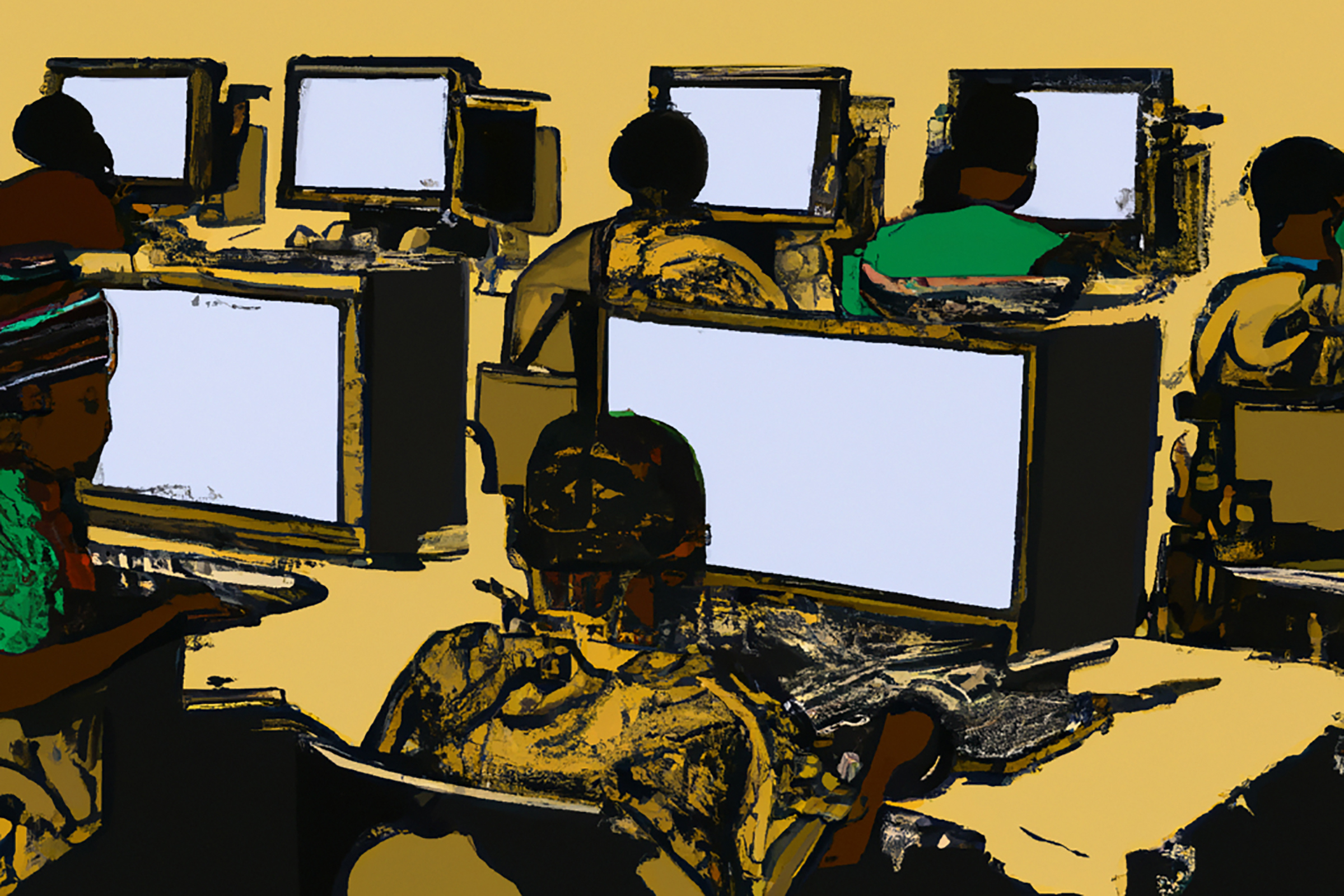
This image was generated by OpenAI’s image-generation software, Dall-E 2. The prompt was: «A seemingly endless view of African workers at desks in front of computer screens in a printmaking style.» TIME does not typically use AI-generated art to illustrate its stories, but chose to in this instance in order to draw attention to the power of OpenAI’s technology and shed light on the labor that makes it possible.
Image generated by Dall-E 2/OpenAI
January 18, 2023 7:00 AM EST
Content warning: this story contains descriptions of sexual abuse
ChatGPT was hailed as one of 2022’s most impressive technological innovations upon its release last November. The powerful artificial intelligence (AI) chatbot can generate text on almost any topic or theme, from a Shakespearean sonnet reimagined in the style of Megan Thee Stallion, to complex mathematical theorems described in language a 5 year old can understand. Within a week, it had more than a million users.
ChatGPT’s creator, OpenAI, is now reportedly in talks with investors to raise funds at a $29 billion valuation, including a potential $10 billion investment by Microsoft. That would make OpenAI, which was founded in San Francisco in 2015 with the aim of building superintelligent machines, one of the world’s most valuable AI companies.
But the success story is not one of Silicon Valley genius alone. In its quest to make ChatGPT less toxic, OpenAI used outsourced Kenyan laborers earning less than $2 per hour, a TIME investigation has found.
More from TIME
The work was vital for OpenAI. ChatGPT’s predecessor, GPT-3, had already shown an impressive ability to string sentences together. But it was a difficult sell, as the app was also prone to blurting out violent, sexist and racist remarks. This is because the AI had been trained on hundreds of billions of words scraped from the internet—a vast repository of human language. That huge training dataset was the reason for GPT-3’s impressive linguistic capabilities, but was also perhaps its biggest curse. Since parts of the internet are replete with toxicity and bias, there was no easy way of purging those sections of the training data. Even a team of hundreds of humans would have taken decades to trawl through the enormous dataset manually. It was only by building an additional AI-powered safety mechanism that OpenAI would be able to rein in that harm, producing a chatbot suitable for everyday use.
To build that safety system, OpenAI took a leaf out of the playbook of social media companies like Facebook, who had already shown it was possible to build AIs that could detect toxic language like hate speech to help remove it from their platforms. The premise was simple: feed an AI with labeled examples of violence, hate speech, and sexual abuse, and that tool could learn to detect those forms of toxicity in the wild. That detector would be built into ChatGPT to check whether it was echoing the toxicity of its training data, and filter it out before it ever reached the user. It could also help scrub toxic text from the training datasets of future AI models.
To get those labels, OpenAI sent tens of thousands of snippets of text to an outsourcing firm in Kenya, beginning in November 2021. Much of that text appeared to have been pulled from the darkest recesses of the internet. Some of it described situations in graphic detail like child sexual abuse, bestiality, murder, suicide, torture, self harm, and incest.
OpenAI’s outsourcing partner in Kenya was Sama, a San Francisco-based firm that employs workers in Kenya, Uganda and India to label data for Silicon Valley clients like Google, Meta and Microsoft. Sama markets itself as an “ethical AI” company and claims to have helped lift more than 50,000 people out of poverty.
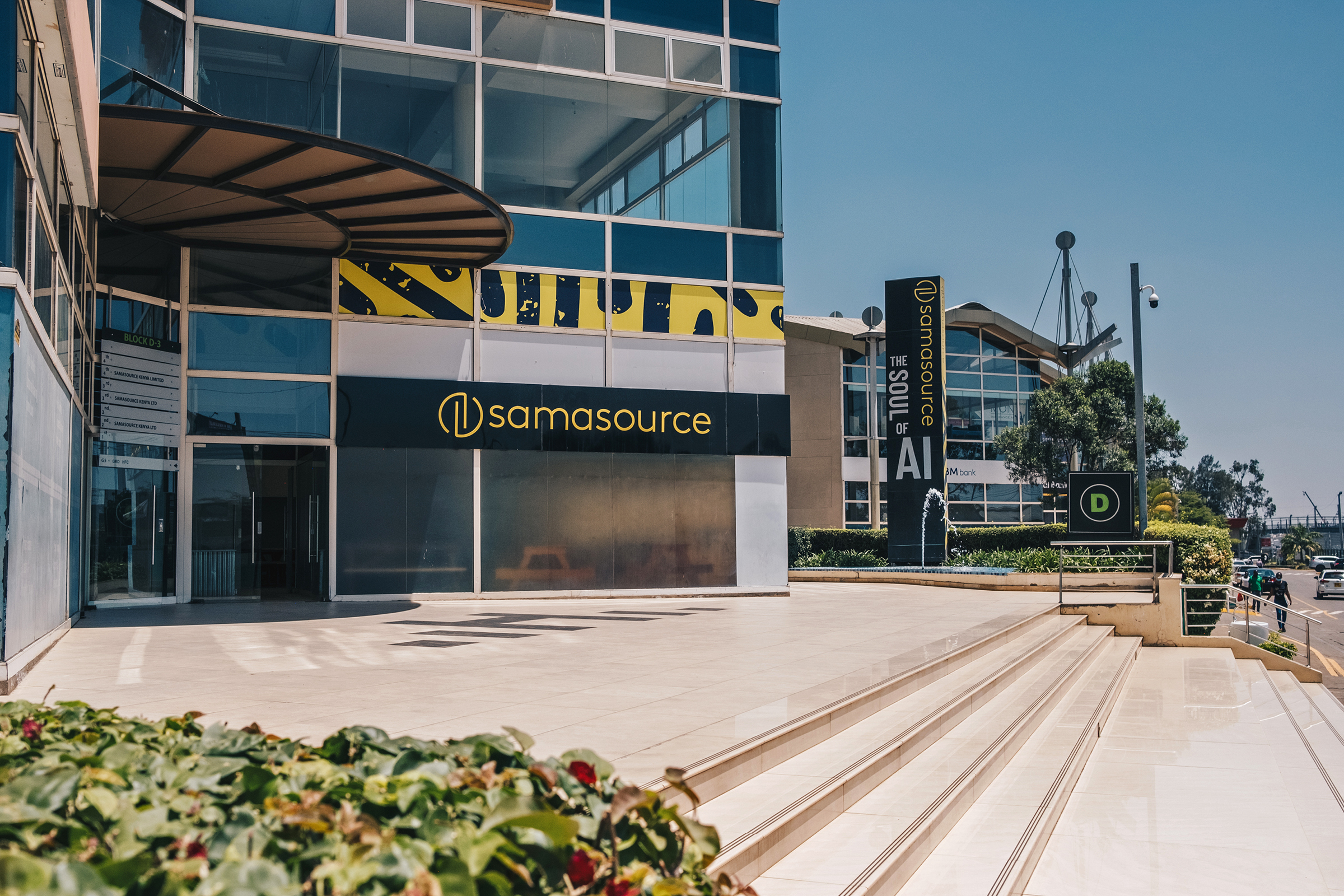
Sama’s office in Nairobi, Kenya, on Feb. 10, 2022.
Khadija Farah for TIME
The data labelers employed by Sama on behalf of OpenAI were paid a take-home wage of between around $1.32 and $2 per hour depending on seniority and performance. For this story, TIME reviewed hundreds of pages of internal Sama and OpenAI documents, including workers’ payslips, and interviewed four Sama employees who worked on the project. All the employees spoke on condition of anonymity out of concern for their livelihoods.
The story of the workers who made ChatGPT possible offers a glimpse into the conditions in this little-known part of the AI industry, which nevertheless plays an essential role in the effort to make AI systems safe for public consumption. “Despite the foundational role played by these data enrichment professionals, a growing body of research reveals the precarious working conditions these workers face,” says the Partnership on AI, a coalition of AI organizations to which OpenAI belongs. “This may be the result of efforts to hide AI’s dependence on this large labor force when celebrating the efficiency gains of technology. Out of sight is also out of mind.” (OpenAI does not disclose the names of the outsourcers it partners with, and it is not clear whether OpenAI worked with other data labeling firms in addition to Sama on this project.)
More from TIME
In a statement, an OpenAI spokesperson confirmed that Sama employees in Kenya contributed to a tool it was building to detect toxic content, which was eventually built into ChatGPT. The statement also said that this work contributed to efforts to remove toxic data from the training datasets of tools like ChatGPT. “Our mission is to ensure artificial general intelligence benefits all of humanity, and we work hard to build safe and useful AI systems that limit bias and harmful content,” the spokesperson said. “Classifying and filtering harmful [text and images] is a necessary step in minimizing the amount of violent and sexual content included in training data and creating tools that can detect harmful content.”
Even as the wider tech economy slows down amid anticipation of a downturn, investors are racing to pour billions of dollars into “generative AI,” the sector of the tech industry of which OpenAI is the undisputed leader. Computer-generated text, images, video, and audio will transform the way countless industries do business, the most bullish investors believe, boosting efficiency everywhere from the creative arts, to law, to computer programming. But the working conditions of data labelers reveal a darker part of that picture: that for all its glamor, AI often relies on hidden human labor in the Global South that can often be damaging and exploitative. These invisible workers remain on the margins even as their work contributes to billion-dollar industries.
One Sama worker tasked with reading and labeling text for OpenAI told TIME he suffered from recurring visions after reading a graphic description of a man having sex with a dog in the presence of a young child. “That was torture,” he said. “You will read a number of statements like that all through the week. By the time it gets to Friday, you are disturbed from thinking through that picture.” The work’s traumatic nature eventually led Sama to cancel all its work for OpenAI in February 2022, eight months earlier than planned.
The Sama contracts
Documents reviewed by TIME show that OpenAI signed three contracts worth about $200,000 in total with Sama in late 2021 to label textual descriptions of sexual abuse, hate speech, and violence. Around three dozen workers were split into three teams, one focusing on each subject. Three employees told TIME they were expected to read and label between 150 and 250 passages of text per nine-hour shift. Those snippets could range from around 100 words to well over 1,000. All of the four employees interviewed by TIME described being mentally scarred by the work. Although they were entitled to attend sessions with “wellness” counselors, all four said these sessions were unhelpful and rare due to high demands to be more productive at work. Two said they were only given the option to attend group sessions, and one said their requests to see counselors on a one-to-one basis instead were repeatedly denied by Sama management.
In a statement, a Sama spokesperson said it was “incorrect” that employees only had access to group sessions. Employees were entitled to both individual and group sessions with “professionally-trained and licensed mental health therapists,” the spokesperson said. These therapists were accessible at any time, the spokesperson added.
The contracts stated that OpenAI would pay an hourly rate of $12.50 to Sama for the work, which was between six and nine times the amount Sama employees on the project were taking home per hour. Agents, the most junior data labelers who made up the majority of the three teams, were paid a basic salary of 21,000 Kenyan shillings ($170) per month, according to three Sama employees. They also received monthly bonuses worth around $70 due to the explicit nature of their work, and would receive commission for meeting key performance indicators like accuracy and speed. An agent working nine-hour shifts could expect to take home a total of at least $1.32 per hour after tax, rising to as high as $1.44 per hour if they exceeded all their targets. Quality analysts—more senior labelers whose job was to check the work of agents—could take home up to $2 per hour if they met all their targets. (There is no universal minimum wage in Kenya, but at the time these workers were employed the minimum wage for a receptionist in Nairobi was $1.52 per hour.)
In a statement, a Sama spokesperson said workers were asked to label 70 text passages per nine hour shift, not up to 250, and that workers could earn between $1.46 and $3.74 per hour after taxes. The spokesperson declined to say what job roles would earn salaries toward the top of that range. “The $12.50 rate for the project covers all costs, like infrastructure expenses, and salary and benefits for the associates and their fully-dedicated quality assurance analysts and team leaders,” the spokesperson added.
An OpenAI spokesperson said in a statement that the company did not issue any productivity targets, and that Sama was responsible for managing the payment and mental health provisions for employees. The spokesperson added: “we take the mental health of our employees and those of our contractors very seriously. Our previous understanding was that [at Sama] wellness programs and 1:1 counseling were offered, workers could opt out of any work without penalization, exposure to explicit content would have a limit, and sensitive information would be handled by workers who were specifically trained to do so.”
In the day-to-day work of data labeling in Kenya, sometimes edge cases would pop up that showed the difficulty of teaching a machine to understand nuance. One day in early March last year, a Sama employee was at work reading an explicit story about Batman’s sidekick, Robin, being raped in a villain’s lair. (An online search for the text reveals that it originated from an online erotica site, where it is accompanied by explicit sexual imagery.) The beginning of the story makes clear that the sex is nonconsensual. But later—after a graphically detailed description of penetration—Robin begins to reciprocate. The Sama employee tasked with labeling the text appeared confused by Robin’s ambiguous consent, and asked OpenAI researchers for clarification about how to label the text, according to documents seen by TIME. Should the passage be labeled as sexual violence, she asked, or not? OpenAI’s reply, if it ever came, is not logged in the document; the company declined to comment. The Sama employee did not respond to a request for an interview.
How OpenAI’s relationship with Sama collapsed
In February 2022, Sama and OpenAI’s relationship briefly deepened, only to falter. That month, Sama began pilot work for a separate project for OpenAI: collecting sexual and violent images—some of them illegal under U.S. law—to deliver to OpenAI. The work of labeling images appears to be unrelated to ChatGPT. In a statement, an OpenAI spokesperson did not specify the purpose of the images the company sought from Sama, but said labeling harmful images was “a necessary step” in making its AI tools safer. (OpenAI also builds image-generation technology.) In February, according to one billing document reviewed by TIME, Sama delivered OpenAI a sample batch of 1,400 images. Some of those images were categorized as “C4”—OpenAI’s internal label denoting child sexual abuse—according to the document. Also included in the batch were “C3” images (including bestiality, rape, and sexual slavery,) and “V3” images depicting graphic detail of death, violence or serious physical injury, according to the billing document. OpenAI paid Sama a total of $787.50 for collecting the images, the document shows.
Within weeks, Sama had canceled all its work for OpenAI—eight months earlier than agreed in the contracts. The outsourcing company said in a statement that its agreement to collect images for OpenAI did not include any reference to illegal content, and it was only after the work had begun that OpenAI sent “additional instructions” referring to “some illegal categories.” “The East Africa team raised concerns to our executives right away. Sama immediately ended the image classification pilot and gave notice that we would cancel all remaining [projects] with OpenAI,” a Sama spokesperson said. “The individuals working with the client did not vet the request through the proper channels. After a review of the situation, individuals were terminated and new sales vetting policies and guardrails were put in place.”
In a statement, OpenAI confirmed that it had received 1,400 images from Sama that “included, but were not limited to, C4, C3, C2, V3, V2, and V1 images.” In a followup statement, the company said: “We engaged Sama as part of our ongoing work to create safer AI systems and prevent harmful outputs. We never intended for any content in the C4 category to be collected. This content is not needed as an input to our pretraining filters and we instruct our employees to actively avoid it. As soon as Sama told us they had attempted to collect content in this category, we clarified that there had been a miscommunication and that we didn’t want that content. And after realizing that there had been a miscommunication, we did not open or view the content in question — so we cannot confirm if it contained images in the C4 category.”
Sama’s decision to end its work with OpenAI meant Sama employees no longer had to deal with disturbing text and imagery, but it also had a big impact on their livelihoods. Sama workers say that in late February 2022 they were called into a meeting with members of the company’s human resources team, where they were told the news. “We were told that they [Sama] didn’t want to expose their employees to such [dangerous] content again,” one Sama employee on the text-labeling projects said. “We replied that for us, it was a way to provide for our families.” Most of the roughly three dozen workers were moved onto other lower-paying workstreams without the $70 explicit content bonus per month; others lost their jobs. Sama delivered its last batch of labeled data to OpenAI in March, eight months before the contract was due to end.
Because the contracts were canceled early, both OpenAI and Sama said the $200,000 they had previously agreed was not paid in full. OpenAI said the contracts were worth “about $150,000 over the course of the partnership.”
Sama employees say they were given another reason for the cancellation of the contracts by their managers. On Feb. 14, TIME published a story titled Inside Facebook’s African Sweatshop. The investigation detailed how Sama employed content moderators for Facebook, whose jobs involved viewing images and videos of executions, rape and child abuse for as little as $1.50 per hour. Four Sama employees said they were told the investigation prompted the company’s decision to end its work for OpenAI. (Facebook says it requires its outsourcing partners to “provide industry-leading pay, benefits and support.”)
Internal communications from after the Facebook story was published, reviewed by TIME, show Sama executives in San Francisco scrambling to deal with the PR fallout, including obliging one company, a subsidiary of Lufthansa, that wanted evidence of its business relationship with Sama scrubbed from the outsourcing firm’s website. In a statement to TIME, Lufthansa confirmed that this occurred, and added that its subsidiary zeroG subsequently terminated its business with Sama. On Feb. 17, three days after TIME’s investigation was published, Sama CEO Wendy Gonzalez sent a message to a group of senior executives via Slack: “We are going to be winding down the OpenAI work.”
On Jan. 10 of this year, Sama went a step further, announcing it was canceling all the rest of its work with sensitive content. The firm said it would not renew its $3.9 million content moderation contract with Facebook, resulting in the loss of some 200 jobs in Nairobi. “After numerous discussions with our global team, Sama made the strategic decision to exit all [natural language processing] and content moderation work to focus on computer vision data annotation solutions,” the company said in a statement. “We have spent the past year working with clients to transition those engagements, and the exit will be complete as of March 2023.”
But the need for humans to label data for AI systems remains, at least for now. “They’re impressive, but ChatGPT and other generative models are not magic – they rely on massive supply chains of human labor and scraped data, much of which is unattributed and used without consent,” Andrew Strait, an AI ethicist, recently wrote on Twitter. “These are serious, foundational problems that I do not see OpenAI addressing.”
With reporting by Julia Zorthian/New York
More Must-Reads From TIME
- The Struggle to Save Lives Inside Gaza’s Hospitals
- Inside COP28’s Big ‘Experiment’
- The 100 Must-Read Books of 2023
- What Fuels Max Verstappen’s Formula One Success
- The Founder of Uniqlo Has a Wake-Up Call for Japan
- How to Set Boundaries With Relatives
- The Oversexualization of Trans Bodies: Column
- Want Weekly Recs on What to Watch, Read, and More? Sign Up for Worth Your Time
Write to Billy Perrigo at billy.perrigo@time.com.
NFT Royalties: A Guide for Artists & Collectors

If you’ve been keeping an eye on the digital art world, you’ve probably come across the term «NFT Royalties.» But what exactly are they? How do they work, and why should you care? In this guide, we’ll be making sense of NFT royalties, demystifying this digital art world concept for artists and collectors alike.
What are NFT Royalties?
NFT Royalties, or Non-fungible token royalties, are basically fees. But they’re not just any fees—they’re special. These fees are paid to the original creator of the NFT each time their work is sold to a new owner. And that’s pretty cool, right? It’s like a digital tip jar that keeps filling up every time someone else appreciates your art enough to buy it.
Let’s break it down a bit more:
- NFT: This is short for Non-fungible token. It’s a type of digital asset, and each one is unique—like a one-of-a-kind piece of art.
- Royalties: These are payments made to the original creator of a work. In the world of NFTs, these payments happen each time the NFT changes hands.
So, if you’re an artist who’s created an NFT, you get a royalty payment every time your NFT is resold. And if you’re a collector who’s purchased an NFT, part of your payment goes back to the original artist as a royalty. That’s how we’re making sense of NFT royalties—it’s a win-win for both artists and collectors!
Why NFT Royalties matter for Artists & Collectors
NFT royalties are shaking up the traditional art world, and for good reason. These royalty payments ensure that artists continue to earn from their work, long after it has left their digital canvas. This is a game changer, as it provides ongoing income rather than just a one-time payment.
Here’s the big deal: In the traditional art world, an artist sells their painting—let’s call it «The Majestic Cat»—to a collector. If that collector later sells «The Majestic Cat» to another collector for a higher price, the artist doesn’t see a dime of that increase. The artist only profited from the original sale.
But in the world of NFTs, the artist can set a royalty rate on their work. This means if «The Majestic Cat» was an NFT and it gets resold, the artist gets a percentage of that sale. So, every time «The Majestic Cat» changes hands, the artist earns from it. Isn’t that purr-fect?
And from a collector’s perspective, NFT royalties are a way to support their favorite artists directly, contributing to their ongoing income. Collectors also benefit, as the value of the NFTs they hold could increase over time, leading to potential profits in the future. So, royalties are not just making sense of NFTs for artists but for collectors too!
How NFT Royalties Work
Imagine you’re an artist who just finished a digital masterpiece—let’s call it «The Glowing Unicorn»—and you’re ready to sell it as an NFT. Here’s how you can make sense of NFT royalties and how they work.
First, you set a royalty rate on «The Glowing Unicorn», say 10%. This means that every time your art changes hands in the future, you’ll receive 10% of the sale price. Nice, right?
The royalty rate is embedded into the NFT through something called a smart contract. This is a type of digital agreement that automatically carries out the terms of the contract when certain conditions are met. In this case, the condition is the sale of «The Glowing Unicorn».
So, if «The Glowing Unicorn» is sold for 50 Ether (a type of cryptocurrency), you, as the artist, will receive 5 Ether. If it’s later resold for 100 Ether, you get another 10 Ether. And this continues for as long as «The Glowing Unicorn» keeps selling. See how this adds up over time? Your digital unicorn could keep earning you Ether while you sleep!
That’s making sense of NFT royalties for you. It’s a system that rewards creativity and longevity, and it’s changing the way artists and collectors think about the value of digital art.
How to Track NFT Royalties
Now that you’ve created «The Glowing Unicorn» and understand how you’ll earn royalties, you might be wondering, «How do I keep track of all those payments?». Don’t worry, I’ve got you covered.
The beauty of NFTs and blockchain technology is that everything is transparent and traceable. When your NFT is bought and sold, the transactions are recorded on the blockchain. Think of it like a public ledger that keeps track of who owns what and how much was paid. It’s like having a super detailed receipt for every sale of «The Glowing Unicorn».
There are also various tools and platforms that can help you monitor your NFT royalties. For example, Etherscan is a popular blockchain explorer that allows you to view all transactions involving your NFT. You can see when it was sold, how much it was sold for, and calculate your royalty from there. Just enter the address of your NFT into the search bar, and voila, all the details are there.
So, while making sense of NFT royalties might seem like a daunting task, the reality is that blockchain technology makes it fairly straightforward. With the right tools, you can easily keep tabs on your «Glowing Unicorn» and watch those royalties roll in.
How to Calculate NFT Royalties
So, you have your NFT, «The Starry Night Sloth», and it’s starting to change hands in the marketplace. Awesome! But how do you figure out what you’re earning from each sale?
Making sense of NFT royalties involves a little bit of math, but don’t worry, it’s nothing too scary. You just need to understand the percentage of the sale that’s coming back to you as a royalty.
Let’s say you’ve set your royalty percentage at 10% for «The Starry Night Sloth». Now, if it sells for 5 Ethereum (ETH), you would earn 0.5 ETH as a royalty. It’s as simple as multiplying the sale price by the royalty rate. In this case, 5 ETH times 10% gives you 0.5 ETH.
Remember, the royalty rate isn’t a one-size-fits-all thing. It can vary depending on the platform or your own preferences. So, it’s crucial to clarify this before you mint your NFT.
By now, you should be getting the hang of making sense of NFT royalties. So, go ahead, release «The Starry Night Sloth» into the wild and watch your royalties stack up!
NFT Royalties and Blockchain
So, where does blockchain fit into the whole NFT royalties conversation? Well, it’s a big player. It’s like the stage where our star, «The Starry Night Sloth», performs.
Blockchain technology is at the heart of NFTs. It’s the ledger that records every transaction, every sale, and every royalty payment. It’s like a super detailed diary, noting down every time «The Starry Night Sloth» changes hands and the royalties you earn from each sale.
Remember, each blockchain platform has its own rules and systems for managing NFT royalties. For instance, Ethereum, the blockchain platform most commonly used for NFTs, uses smart contracts. These are like digital agreements that automatically handle the royalty payments when an NFT is sold.
Think of it as an invisible middleman, making sure you get your share from every sale. So, when «The Starry Night Sloth» is sold, the smart contract on the Ethereum blockchain automatically sends your royalty payment to your digital wallet. Pretty cool, right?
Understanding the role of blockchain in NFT royalties is a key part of making sense of NFT royalties. As you explore the world of NFTs, you’ll get to see just how much blockchain technology shapes this exciting new landscape.
NFT Royalties in different NFT Marketplaces
Just as every artist has their own style, every NFT marketplace has its own way of dealing with NFT royalties. Let’s take a quick tour around some of the popular ones, shall we?
OpenSea: This is the eBay of the NFT world. It’s vast and varied. But when it comes to royalties, OpenSea allows artists to set a royalty percentage for future sales when they mint their NFTs. So, if you decide to mint «The Starry Night Sloth» on OpenSea, you can decide what slice of the pie you want from future sales.
Rarible: Rarible is another major player in the NFT marketplace. It has a standard royalty rate of 10% for artists. That means every time «The Starry Night Sloth» is sold on Rarible, you get 10% of the sale price. No haggling, no confusion. Simple and straightforward.
Foundation: Foundation has a similar approach as Rarible. The royalty rate is set at 10%. But there’s a catch. The royalties only apply if the NFT is sold within the Foundation marketplace. If «The Starry Night Sloth» decides to hop over to another marketplace, the royalties don’t follow.
So, you see, making sense of NFT royalties also involves understanding the rules of the marketplace where you plan to mint and sell your NFTs. Each marketplace has its own charm, and its own way of handling royalties. Choose wisely!
Legal aspects of NFT Royalties
Now, let’s talk about the legal side of NFT royalties. And no, you don’t need to be a lawyer to understand this stuff. We’re just making sense of NFT royalties, remember?
First off, it’s important to know that NFTs and the royalties attached to them are still a new concept. This means the legal landscape around them is still kind of like the Wild West—exciting but quite uncertain.
One key issue is that of copyright. Just because you buy an NFT doesn’t mean you own the copyright to the work. The artist still holds that. So, if you buy an NFT of «The Starry Night Sloth», you can’t just start printing it on T-shirts and selling them. That’s a no-no.
Then there’s the matter of royalty enforcement. While blockchain technology makes it possible to track and distribute royalties, it doesn’t guarantee that it will happen. Some marketplaces might not honor the royalty agreements from other platforms. So, if «The Starry Night Sloth» hops from OpenSea to another marketplace, the artist’s royalties might get lost in the move.
Finally, there are legal jurisdictions to consider. The internet is global, but laws are not. What happens if an artist in Canada mints an NFT, but the buyer is in Japan? Which country’s laws apply to the transaction and the royalties?
These are complex issues, and we’re still figuring out the answers. But don’t let that scare you away from NFTs. Just like the early days of the internet, there’s a lot of potential here. We just need to navigate it with care.
Future of NFT Royalties
Okay, so we’ve looked at the current landscape of NFT royalties, but what about the future? Can we predict where this roller-coaster is headed? Well, we can certainly try.
The future of NFT royalties is, in a word, promising. As we’re making sense of NFT royalties, we’re seeing that they offer a new way for artists to benefit from the resale of their work. That’s a big deal.
Imagine you’re an artist who creates a digital masterpiece—let’s call it «Moonwalk Mongoose». You mint it as an NFT and sell it. A few years later, «Moonwalk Mongoose» becomes a viral sensation and its price skyrockets. With traditional art sales, you wouldn’t see a dime of that increase. But with NFT royalties, you get a cut every time it’s sold. That’s pretty cool, right?
But it’s not just about money. NFT royalties could also lead to a shift in how we think about art ownership and value. They could turn art into a type of investment where both the artist and the collector benefit from price increases. That’s a win-win scenario.
Of course, there are challenges ahead. We still need to sort out the legal issues, improve the technology, and educate people about NFTs and royalties. But if we can do that, the future of NFT royalties looks bright.
So, are you ready to jump into the world of NFTs and royalties? Remember, it’s not just about buying a piece of digital art. It’s about supporting artists and reshaping the art world. And who knows? Maybe your NFT collection will be the next big thing!
Conclusion
So, we’ve journeyed through the land of NFT royalties, deciphering the language, uncovering the benefits, and even gazing into the crystal ball of its future. Making sense of NFT royalties might not be a walk in the park, but hopefully, it’s a bit clearer now.
Whether you’re an artist looking for a fairer way to profit from your work, or a collector keen to support your favorite artists while possibly gaining from price hikes, NFT royalties may offer an exciting opportunity.
But remember, NFTs and royalties are like a pair of dancing shoes. They might look flashy and promise a great time, but you need to learn the steps. Do your research, understand the legal and technical aspects, and tread carefully.
And don’t forget the big picture. The true value of NFT royalties isn’t just in the potential earnings. It’s in the chance to reshape the art world into a place where artists are rewarded every time their work is sold. That’s a future worth striving for, isn’t it?
So, as we wrap up this journey of making sense of NFT royalties, remember this: It’s not just about the money. It’s about the art. It’s about the artists. And it’s about creating a fairer, more rewarding world for everyone. Now, that’s a masterpiece, wouldn’t you agree?
If you’re interested in exploring the world of NFTs further, don’t miss the workshop ‘Sell Your Creations As NFTs’ by Tom Glendinning. This workshop will provide you with invaluable insights and practical tips on how to successfully sell your creations as NFTs, helping you navigate the exciting and rapidly-evolving world of digital art and royalties.
How Do NFT Royalties Work?
In the world of digital assets, non-fungible tokens (NFTs) and royalties have been two of the most talked-about topics in recent months. But what do they mean for artists, collectors, and other stakeholders?
In this article, we will explore how NFTs and royalties work and discuss some of each system’s key benefits and drawbacks.
Contact Us
NFTs And Royalties – What Are They?
Non-fungible tokens, or NFTs, are unique digital assets that are unchangeable. They’re kept on a blockchain and have their smart contract to govern how they may be utilized and transferred.
One of the key benefits of NFTs is that they can be used to pay royalties. For example, suppose an artist sells an NFT representing a piece of digital art. In that case, they can use the smart contract to specify that the buyer will automatically pay them a royalty every time the NFT is re-sold.
This way, the artist can continue to earn revenue from their work even if they no longer own the NFT. Similarly, musicians can use NFTs to ensure they receive royalties for future music sales. In this way, NFTs have the potential to revolutionize the way we buy and sell digital content.

How NFT Royalties can Help Music Artists
Throughout any industry that has involved some form of art, be it artwork, or a music track, typically, music artists were the last ones to get paid.
Royalties can help artists by giving them a solid income stream at any point in time when their NFT gets sold in the future.
Furthermore, artists can show their appreciation and support by giving their fans exclusive access to their NFTs. Through this process, they can monetize their work by earning directly from these fans, by selling NFTs of their songs, or even tickets for their online events, all of which will put more money in their pocket instead of that money going to the label they have signed up with.
Example of NFT Royalties
By properly setting up NFT royalties, the artist in question can earn from their creations at any point when they get sold.
Step-by-Step Process Example
- This essentially means that, for example, an artist can launch a set of 1,000 NFTs.
- Each of these NFTs will have a minting cost or can be purchased directly from the artist.
- The artist would initially own all 1,000 NFTs.
- They would set up a 10% royalty on each NFT.
- If those NFTs are sold for $50 per NFT each, the artist would initially get $50,000 for them.
- However, let’s imagine that those NFTs increase and all of them reach a value of $100.
- If all of the NFTs were to be sold, they would sell for $100,000.
- As the creator of those NFTs has royalties tied to them, equal to 10%, they would receive 10% of those $100,000 or $10,000.
- And every time the NFT gets re-sold from one person to another, 10% goes to the original creator.
In reality, these NFTs will likely shift up and down in value, and there is no guarantee that all of them will get sold.
However, these numbers are meant to give users a perspective on how they can expect the procedure to occur.

Earning NFT Royalties
If you’re creative, you may be wondering how you can earn money from your work. After all, traditional methods like selling prints or charging for commissions can only take you so far. One newer method that has gained traction recently is selling non-fungible tokens, or NFTs.
NFTs are smart contracts that represent ownership of digital assets. They can be used for various things, from buying and selling virtual land in online games to representing ownership of digital art. When you sell an NFT, you receive a cryptocurrency payment in return. This payment is generally split between the creator of the NFT (you) and the platform that facilitated the sale.
Royalties on Each Secondary Sale
However, it’s important to note that NFTs can also be re-sold by the original buyer. So, if someone buys your NFT for $100 and then re-sells it for $200, you’ll still receive a royalty payment based on the original sale price. Royalty payments typically range from 5-10% of the total sale price, so in this case, you would receive $5-$10 from the secondary sale.
How To Set Up NFT Royalties
When creating a smart contract related to an NFT, the first thing to consider is how royalties will be set up. There are a few different options available, and the best option will depend on the specifics of the contract.
One common approach is to set a fixed percentage that the creator will pay out each time the NFT is sold. Another method is to set a minimum price for the NFT and then pay out royalties based on a percentage of the sale price.
This approach allows the creator to earn more money if the NFT sells for a higher price, but it also means that there is less incentive for buyers to purchase the NFT. The best approach will depend on the objectives of the smart contract.
Secondary Sales
Regarding secondary sales, the original artist or creator always keeps their NFT royalties. No matter how many times the NFT changes hands, it will continue to receive a royalty fee each time it is sold. This is how NFT royalties work – the artist is compensated for every sale, ensuring that they continue to profit from their work even after it has been sold.
NFT royalties can be set up in a few different ways, but the most common method is a percentage-based system. Under this system, the artist receives a certain percentage of each sale, with the rest going to the new owner.
This ensures that the artist is compensated for their work while also allowing the new owner to profit from the secondary sale. While there are other methods of setting up NFT royalties, this percentage-based system is by far the most common.