Странные переходы из всех соцсетей
Вот читаю форум и думаю, если здесь пишут именно сеошники, то кому мы доверяем свои сайты? Что здесь не понятного, (какие нафиг: Парсинг, Спам боты или Дос атака? — логи посмотрите) — идет накрутка П.Ф. и ни какой платный SSL сертификат не поможет и доменные зоны тоже не причем. Как будто с луны свалились — в ноябре два года будет, как крутят массово П.Ф. Ребятки до недавнего времени тестировали прогу, в которой можно выставлять любые переходы — от прямых, до переходов с сайтов силовых структур, а сейчас (очень глупо поступили-палева много) набрали обороты. Frol4ic вы пишете: Парсить реферер на наличие ссылки на наш сайт. Если ссылки нет — в бан: — ЖЕЛАЮ УДАЧИ, ТАК КАК НЕТ НЕ ОДНОГО ПОВТОРНОГО ЗАХОДА С ОДНОГО И ТОГО ЖЕ IP-адреса, и дважды перехода с одного и того же сайта тоже нет и не будет. Сейчас в ближайшее время, скорее всего, появится программа, конечно же платная, которая будет отсекать этих ботов (возможно ее будут продавать те же , кто сейчас терроризирует сайты).
Помогите расшифровать данные ip адреса ( адресс человека и телефон )
IP213.87.150.235
Хост: 213.87.150.235
Город: Москва
Страна: Russian Federation
IP диапазон: 213.87.128.0 — 213.87.159.255
Название провайдера: Mobile subscribers pool
inetnum: 213.87.128.0 — 213.87.159.255
netname: MTSGPRS-3
descr: Mobile subscribers pool
remarks: INFRA-AW
country: RU
admin-c: MTU1-RIPE
tech-c: MTU1-RIPE
admin-c: MTSA
tech-c: MTSN
status: ASSIGNED PA
mnt-by: MTSNET-MNT
mnt-by: MTU-NOC
mnt-routes: MTSNET-MNT
mnt-routes: MTU-NOC
created: 2015-08-25T13:07:29Z
last-modified: 2015-08-25T13:07:29Z
source: RIPE
role: MTSNET Administration
address: MTS PJSC
address: 4, Marksistskaya str., 109147 Moscow, Russia
phone: +7 495 7660131
mnt-by: MTSNET-MNT
remarks: abuse-mailbox: info@mts.ru
admin-c: YUF-RIPE
tech-c: YUF-RIPE
nic-hdl: MTSA
created: 2004-04-03T10:05:17Z
last-modified: 2016-01-28T08:34:41Z
source: RIPE # Filtered
role: MTSNET NOC
address: MTS PJSC
address: 4, Marksistskaya str.
address: 109147 Moscow, Russia
remarks: abuse-mailbox: info@mts.ru
admin-c: YUF-RIPE
tech-c: YUF-RIPE
nic-hdl: MTSN
created: 2004-04-03T09:50:46Z
last-modified: 2016-01-28T08:35:53Z
source: RIPE # Filtered
mnt-by: MTSNET-MNT
role: MTU-Intel NOC
address: PJSC MTS / former CJSC Comstar-Direct
address: Petrovsky blvd 12, bldg 3
address: P.O. BOX 4711 127051
address: Moscow, Russia
remarks: **************************************
remarks: Contact addresses:
remarks: routing & peering noc@mtu.ru
remarks: spam & security abuse@mtu.ru
remarks: mail postmaster@mtu.ru
remarks: ddos reports ddos-reports@mtu.ru
remarks: **************************************
phone: +7 495 721-34-99
fax-no: +7 495 956-07-07
admin-c: EDA-RIPE
admin-c: RPS-RIPE
tech-c: EDA-RIPE
tech-c: SAAP-RIPE
nic-hdl: MTU1-RIPE
mnt-by: MTU-NOC
created: 2002-10-18T13:29:19Z
last-modified: 2015-12-28T13:23:12Z
source: RIPE # Filtered
route: 213.87.144.0/20
descr: Mobile TeleSystems, PJSC, NAT for GPRS/3G
origin: AS8359
mnt-by: MTSNET-MNT
mnt-by: MTU-NOC
created: 2015-08-25T13:08:40Z
last-modified: 2015-08-25T13:08:40Z
source: RIPE
Лучший ответ
адрес человека?) -ты только адрес провайдера видишь, а не человека. вот у его провайдера и спроси кто с этим ип был в это время. только пошлет он тебя далеко и надолго с таким вопросом). мтс-москва, попробуй, а я пока поржу).
Остальные ответы
(щас отсмеюсь только. )
Так и представляю как кто то тебя обосрал а ты вычислять по IP решил. Расслабься, «айтишник».
провайдер предоставит тебе необхрдимую информацию только следственным органам на основании возбужденного уголовного дела
Ну это инфа провайдера по данному айпи звони провайдеру и спрашивай что и как по этим но ерам а раз ты не мент можешь не пытаться
Эти данные провайдер выдаст только «органам» по соответствующему запросу. Простые смертные будут посланы подальше.
Накрутка трафика или Боты на сайте

Но так же есть и прямы заходы. Длительность такого визита не превышает 3 минут и просмотра 2-3 страниц сайта.
Очень редко встречается выполнение целей таких как:
- Клик по номеру телефона
- Запыление форм
- Клик на e-mail и.т.д
Так как же защититься
Пока для себя нашел 3 варианта это:
- Блокировка по IP в .htaccess.
- Пропускать весь трафик через cloudflare
- Перенаправлять накрученный трафик на сайт одностаничник
Address-Assignment Pools for Subscriber Management
The address-assignment pool enables you to create centralized IPv4 and IPv6 address pools independent of the client applications that use the pools. The authd process manages the pools and the address allocation, whether the addresses come from local pools or from a RADIUS server.
For example, multiple client applications, such as DHCP, can use the same address-assignment pool to provide addresses for their particular clients. Client applications can acquire addresses for either authenticated or unauthenticated clients. The pool selected for a subscriber, based on the RADIUS server or network matching or other rule, is called the matching pool for the subscriber.
- Address Assignment Types
- Named Address Ranges in Address Assignment Pool
- Address Allocation from Linked Address Pools
- Address Pool Hold-Down State
- Address-Assignment Pool for Neighbor Discovery Router Advertisement
- Excluding Specified Address or Address Range
- Licensing Requirement
- Benefits of Address Assignment Pools
Address Assignment Types
Address-assignment pools support both dynamic and static address assignment. In dynamic address assignment, a client is automatically assigned an address from the address-assignment pool. In static address assignment, which is supported for IPv4 pools only, you reserve an address that is then always used by a particular client. Addresses that are reserved for static assignment are removed from the dynamic address pool and cannot be assigned to other clients.
Named Address Ranges in Address Assignment Pool
You can configure named address ranges within an address-assignment pool. A named range is a subset of the overall address range. A client application can use named ranges to manage address assignment based on client-specific criteria. For example, for IPv4 address-assignment pools, you might create a named range that is based on a specific DHCP option 82 value. Then, when a DHCP client request matches the specified option 82 value, an address from the specified range is assigned to the client.
Address Allocation from Linked Address Pools
You can link address-assignment pools together to provide backup pools for address assignment. When no addresses are available in the primary or in the matching address pool, the device automatically proceeds to the linked (secondary) address pool to search for an available address to allocate.
Although the first pool in a chain of linked pools is generally considered the primary pool, a matching pool is not necessarily the first pool in the chain.
Starting in Junos OS Release 18.1R1, search mechanism for an available address proceeds through a chain of linked pools. This behavior enables the DHCP to search addresses contiguously..
Lets use an example on how the search mechanism works. Consider a chain of three pools— A, B, and C. Pool A is the primary pool, Pool B is the matching pool for certain subscribers based on information returned by the RADIUS server. The search for an available address for those subscribers uses the following sequence:
- By default, the matching pool (Pool B) is searched first.
- The search moves to the first pool (Pool A) in the chain if address not found.
- The search proceeds through the chain (Pool C) until an available address is found and allocated, or until the search determines no addresses are free.
- In each pool, all address ranges are fully searched for an address.
You can configure the linked-pool-aggregation statement to start searching within a block of addresses in each range in the matching pool and then successively through the linked pools. The search then moves back to the first pool in the chain and searches all addresses in all ranges in each pool through the last pool in the chain.
Address Pool Hold-Down State
You can configure an address-assignment pool in hold-down state. When the address pool is in hold-down state, the pool is no longer available to allocate IP addresses for the subscribers. This configuration gracefully transforms the active pool to an inactive state as the previously allocated addresses are returned to the pool. When the pool is inactive, you can safely perform maintenance on the pool without affecting any active subscribers.
Address-Assignment Pool for Neighbor Discovery Router Advertisement
You can explicitly allocate an address-assignment pool for Neighbor Discovery Router Advertisement (NDRA).
Excluding Specified Address or Address Range
Starting in Junos OS Release 18.1R1, you can exclude a specified address or range of consecutive addresses to prevent them from being allocated from an address pool.
For example, you might want to reserve certain addresses or ranges to be used only for static subscribers. When you configure an address or range to be excluded, and the address or an address within the range, has already been allocated, that subscriber is logged out, the address is deallocated, and the address is marked for exclusion.
Licensing Requirement
This feature requires a license. To understand more about Subscriber Access Licensing , see Subscriber Access Licensing Overview. Please refer to the Juniper Licensing Guide for general information about License Management. Please refer to the product Data Sheets for details, or contact your Juniper Account Team or Juniper Partner.
Benefits of Address Assignment Pools
- The address-assignment pool feature supports both subscriber management and DHCP management.
- You can create centralized pools of addresses independent of client applications.
- You can specify blocks of addresses, named ranges, so that a given address pool can be used to supply different addresses for different client applications or for subscribers that match different sets of criteria.
- You can link pools together to ensure that pools are searched for free addresses in a specific manner, contiguously or noncontiguously.
- You can gracefully transition an address pool from active to inactive by specifying that no further addresses are allocated from the pool.
Address Allocation from Linked Address Pools
You can link address-assignment pools together into a chain to provide backup pools for address assignment. The pool selected for a subscriber, based on the RADIUS server or network matching or some other rule, is called the matching or matched pool for the subscriber. The matching pool might not be the first (primary) pool in the chain. When no addresses are available for allocation from the matching or primary address pool, the router or switch automatically proceeds to another address pool to search for an available address to allocate. When the search discovers no available addresses anywhere, the search stops and no address is allocated for the subscriber.
The search behavior determines not only how the search progresses along a chain of linked pools, but which address ranges within each pool are searched. Depending on where the search starts, your configuration, and whether previously allocated addresses have been freed, the search may continue in the next linked address pool in the chain, or move back to the first pool in the chain.
The search for an available address starts in the pool that matches the subscriber. In many cases, the matching pool is also the first pool in the chain. For some subscribers, the matching pool is farther down the chain. For example, you might configure the RADIUS server to specify the second pool of a chain rather than the first based on some criteria that it matches during authentication. For another example, you might specify different address ranges for different subscriber groups; whether a particular pool matches a subscriber then depends on which pools are configured for the different address ranges.
The following terms are used to explain the details of the search behavior:
- lowAddress—The lowest address in a given range within an address pool.
- highAddress—The highest address in a given range within an address pool.
- nextAddress—The next address after the last address allocated in a given range within an address pool. This is the address expected to be allocated next. This address, as well as the last range used, is saved as a starting point for searches.
For example, suppose Pool A has a single range that includes the following addresses: 192.0.2.1, 192.0.2.2, 192.0.2.3, 192.0.2.4. In this case, 192.0.2.1 is the lowAddress and 190.0.2.4 is the highAddress. If 192.0.2.2 was the last address allocated from this pool, then nextAddress is 192.0.2.3.
Starting in Junos OS Release 18.1R1, you can configure linked pools to be searched in one of two ways:
- Contiguous address allocation—This is the default behavior. All addresses in each range of a pool are searched. The search starts in the matched pool, then moves to the first pool in the chain and, if necessary, continues through each linked pool successively to the last pool in the chain. In each pool, all addresses in all ranges are searched for a free address. This method enables addresses to be assigned contiguously; each pool has to be full before another pool is searched.
- Noncontiguous (aggregated) address allocation—Behavior when the linked-pool-aggregation statement is configured. Initially, only certain addresses (from nextAddress to highAddress) are searched in each range of the matched pool. The same search is performed in the linked pool and, if necessary, continues through each linked pool successively to the last pool in the chain. The search then restarts at the first pool in the chain (not necessarily the matched pool). This time, all addresses in all ranges are searched, in all pools through the end of the chain.
That is the basic functionality, but the details of both searches are fairly complex. Figure 1 shows the default search behavior.
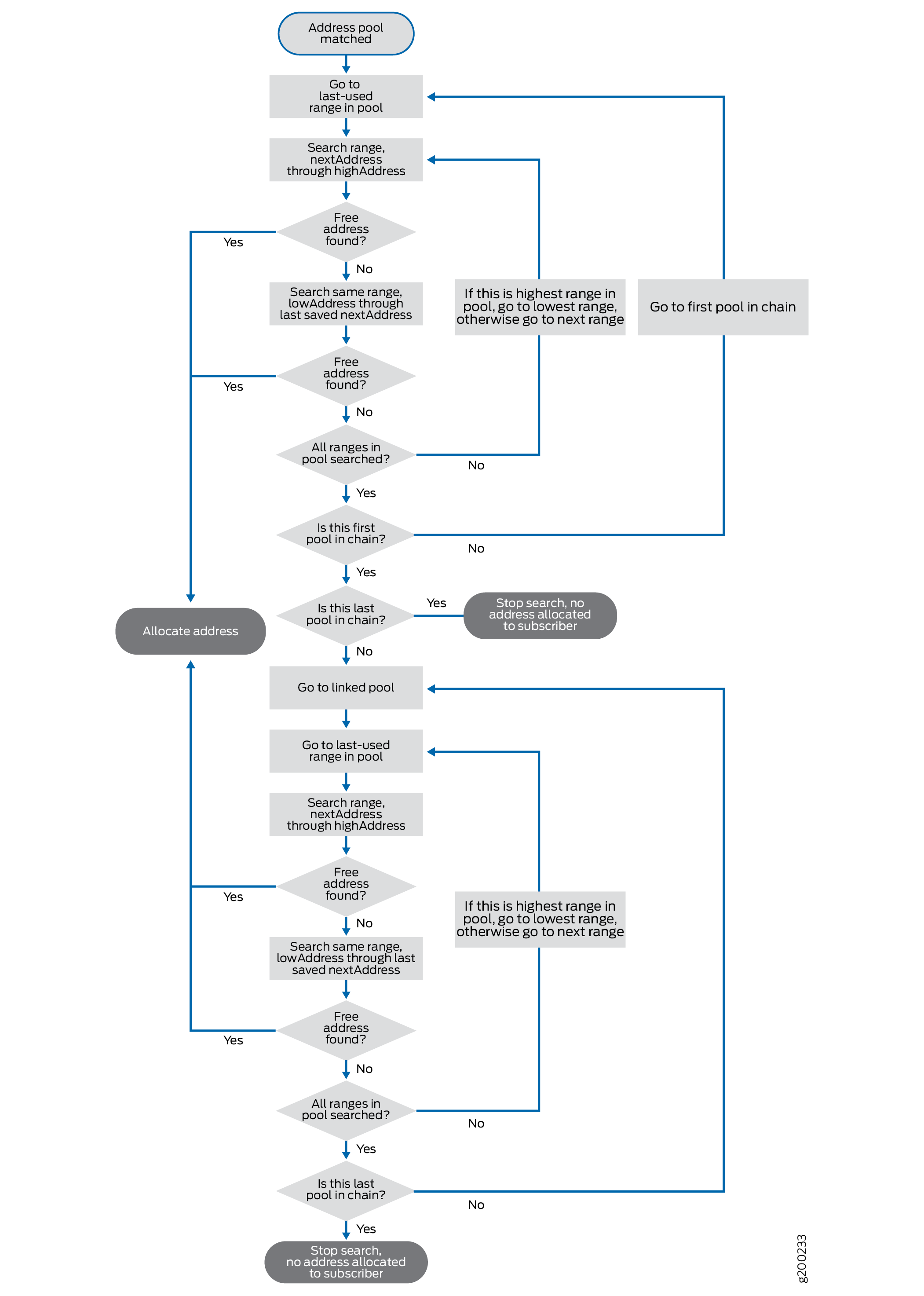
Figure 1: Default Address Assignment from Linked Address Pools
For example, suppose the following conditions exist:
- Linked address pools A, B, C, and D. Pool C is matched.
- Each pool has three address ranges, r1, r2, r3. The last used range was r2 in each pool.
If no free address is found, the search proceeds like this: C > A > B > C > D, then stops.
- Pool C is searched, nextAddress through highAddress in range r2.
- Pool C is searched, lowAddress through nextAddress in range r2.
- Pool C is searched, nextAddress through highAddress in range r3.
- Pool C is searched, lowAddress through nextAddress in range r3.
- Pool C is searched, nextAddress through highAddress in range r1.
- Pool C is searched, lowAddress through nextAddress in range r1. All ranges and addresses in pool C have been searched, so the search moves to the first pool in the chain, A.
- Pool A is searched, nextAddress through highAddress in range r2.
- Pool A is searched, lowAddress through nextAddress in range r2.
- Pool A is searched, nextAddress through highAddress in range r3.
- Pool A is searched, lowAddress through nextAddress in range r3.
- Pool A is searched, nextAddress through highAddress in range r1.
- Pool A is searched, lowAddress through nextAddress in range r1. All ranges and addresses in pool A have been searched, so the search moves to the next linked pool in the chain, B.
This process continues until all addresses in all ranges in all pools have been searched. The pool search order is C > A > B > C > D, then stops. Depending on where and whether an address is found, the matching pool might be searched twice. This is true unless the matching pool is the first pool in the chain. For example, if pool A is the matching pool in this set of conditions, then the complete search (assuming no address is found) would be A > B > C > D.
Figure 2 shows the search behavior when you include the linked-pool-aggregation statement.
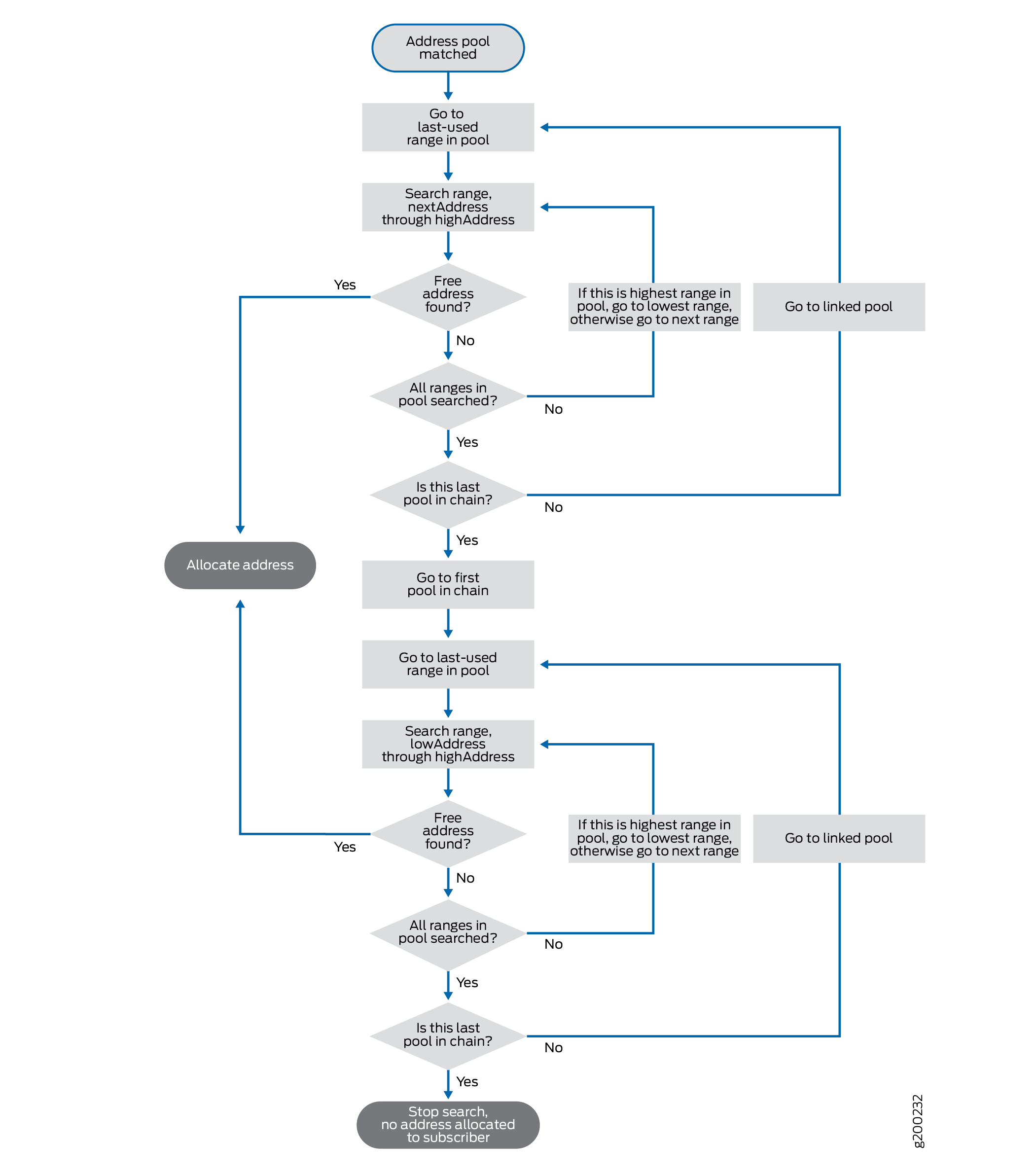
Figure 2: Aggregated Address Assignment from Linked Address Pools
For example, consider the same conditions exist as for the default example:
- Linked address pools A, B, C, and D. Pool C is matched.
- Each pool has three address ranges, r1, r2, r3. The last used range was r2 in each pool.
If no free address is found, the search proceeds like this: C > D > A > B > C > D, then stops.
- Pool C is searched, nextAddress through highAddress in range r2.
- Pool C is searched, nextAddress through highAddress in range r3.
- Pool C is searched, nextAddress through highAddress in range r1. All ranges in pool C have been searched from nextAddress to highAddress, so the search moves to the next linked pool in the chain, D.
- Pool D is searched, nextAddress through highAddress in range r2.
- Pool D is searched, nextAddress through highAddress in range r3.
- Pool D is searched, nextAddress through highAddress in range r1. All ranges in pool D have been searched from nextAddress to highAddress. Pool D is the last pool in the chain, so the search moves to the first pool in the chain, A.
- Pool A is searched, lowAddress through highAddress in range r2.
- Pool A is searched, lowAddress through highAddress in range r3.
- Pool A is searched, lowAddress through highAddress in range r1. All ranges and addresses in pool A have been searched, so the search moves to the next linked pool in the chain, B.
- Pool B is searched, lowAddress through highAddress in range r2.
- Pool B is searched, lowAddress through highAddress in range r3.
- Pool B is searched, lowAddress through highAddress in range r1. All ranges and addresses in pool B have been searched, so the search moves to the next linked pool in the chain, C.
This process continues until all addresses in all ranges in all pools have been searched. The pool search order is C > D > A > B > C > D, then stops. Depending on where and whether an address is found, all pools might be searched twice, even when the matching pool is the first pool in the chain. For example, if pool A is the matching pool in this set of conditions, then the complete search (assuming no address is found) would be A > B > C > D > A > B > C > D.
Address-Assignment Pool Configuration Overview
The address-assignment pool feature supports subscriber management functionality by enabling you to create address pools that can be shared by different client applications. An address-assignment pool can support either IPv4 address or IPv6 addresses. You cannot use the same pool for both types of address.
Address-assignment pools are completely separate from services PIC-based L2TP LNS address pools, which you create with the address-pool statement at the [edit access] hierarchy level, and NAT pools, which you create with the pool statement at the [edit services nat] hierarchy level.
To configure an address-assignment pool:
- Configure the address-assignment pool name and specify the addresses for the pool.
See Also
Configuring an Address-Assignment Pool Name and Addresses
To configure an address-assignment pool, you must specify the name of the pool and configure the addresses for the pool.
To configure an IPv4 address-assignment pool:
- Configure the name of the pool and specify the IPv4 family.
[edit access] user@host# edit address-assignment pool isp_1 family inet
[edit access address-assignment pool isp_1 family inet] user@host# set network 192.168.0.0/16
To configure an IPv6 address-assignment pool:
-
Configure the name of the pool and specify the IPv6 family.
[edit access] user@host# edit address-assignment pool isp_2 family inet6
[edit access address-assignment pool isp_2 family inet6] user@host# set prefix 2001:db8:2008:2009::/32
Configuring a Named Address Range for Dynamic Address Assignment
You can optionally configure multiple named ranges, or subsets, of addresses within an address-assignment pool. During dynamic address assignment, a client can be assigned an address from a specific named range. To create a named range, you specify a name for the range and define the address range.
To create a named range within an IPv4 address-assignment pool:
- Specify the name of the address-assignment pool and the IPv4 family.
[edit access] user@host# edit address-assignment pool isp_1 family inet
[edit access address-assignment pool isp_1 family inet] user@host# set range southeast low 192.168.102.2 high 192.168.102.254
To create a named range within an IPv6 address-assignment pool:
-
Specify the name of the address-assignment pool and the IPv6 family.
[edit access] user@host# edit address-assignment pool isp_2 family inet6
[edit access address-assignment pool isp_2 family inet6] user@host# set range dsl-range low 2001:db8:2008:2010:2011:0100::/64 high 2001:db8:2008:2010:2011:ffff::/64 user@host# set range fiber-east prefix-length 48
Preventing Addresses from Being Allocated from an Address Pool
You can exclude specified addresses or address ranges to prevent them from being allocated from an address pool. For example, you might want to reserve certain addresses or ranges to be used only for static subscribers. When you configure an address or range of addresses to be excluded, and the address or an address within the range has already been allocated, that the subscriber allocated that address is logged out, the address is deallocated, and the address is marked for exclusion.
To exclude an address or range of addresses in an address pool from being allocated:
-
Specify an individual address.
[edit access address-assignment pool-name family (inet | inet6)] user@host# set excluded-address ip-address
[edit access address-assignment pool-name family (inet | inet6)] user@host# set excluded-range name low minimum-value high maximum-value
For example, the following partial configuration for an IPv4 address pool defines a range, r1, of addresses to allocate, from 192.168.0.10 through 192.168.128.250. It excludes a single address, 192.168.110.10. It further defines two ranges, exclude1 and exclude2, that specify two sets of consecutive addresses that cannot be allocated from the pool.
pool v4-pool < family inet < network 192.168.0.0/16; range r1 < low 192.168.0.10; high 192.168.128.250; >excluded-address 192.168.110.10 excluded-range exclude1 < low 192.168.12.0 high 192.168.12.255 >excluded-range exclude2 < low 192.168.98.10 high 192.168.98.200 >> >
Similarly, the configuration for pool v6-pool defines a range of addresses to allocate and a range of addresses that are excluded from allocation.
pool v6-pool < family inet6 < prefix 2016::/64; range r2 < low 2016::1; high 2016::80:ffff; >excluded-range exclude3 < low 2016::7c:a high 2016::7c:ff >> >
To view information about excluded addresses, you can use either of the following commands:
user@host> show network-access address-assignment pool pool-name IP address/prefix Hardware address Host/User Type 192.168.2.1 00:00:5e:00:53:01 user1 DHCP 192.168.2.2 00:00:5e:00:53:02 user2 DHCP 192.168.2.3 00:00:5e:00:53:03 user3 DHCP 192.168.2.4 NA EXCLUDED unknown
user@host> show network-access aaa statistics address-assignment pool pool-name Address-assignment statistics . Addresses excluded: 1000 .
Configuring Address-Assignment Pool Usage Threshold Traps
You can receive advanced warning that an address pool or linked set of address pools is running short on available addresses by setting usage (utilization) threshold traps. Usage and utilization are used interchangeably to mean the percentage of addresses in an address pool that are currently assigned. An address pool has the following SNMP thresholds associated with it that allow the local address server to signal SNMP traps when certain conditions exist:
- high-utilization threshold—When the percentage of addresses assigned from an address pool exceeds this value, a high-utilization SNMP trap is generated. The system sends warning messages as long as this threshold is exceeded.
- abated-utilization threshold—When the percentage of addresses assigned from an address pool drops below this value, an abated-utilization trap is generated. The system stops sending the warning messages. Typically, you set the abated-utilization threshold to less than the high-utilization threshold; you cannot set it higher.
The thresholds do not have default values. If you do not configure these thresholds, the system does not send a notification of impending exhaustion as the percentage of addresses assigned approaches 100 percent. The system sends an out-of-address trap only when all addresses in the address pool have been assigned.
Starting in Junos OS Release 19.2R1, the out-of-address trap is not sent unless both the high-utilization threshold and the abated-utilization threshold are configured. When the out-of-address trap is sent, an out-of-address syslog message is also sent.
You can configure thresholds for all address pools at the [edit access address-assignment] hierarchy level or for only address pools in a specified routing instance at the [edit routing-instance routing-instance-name ] hierarchy level. The configurations below show only the [edit access] configuration.
To set the threshold traps:
-
Specify the high-utilization threshold for IPv4 or IPv6 address pools.
[edit accessaddress-assignment] user@host# set high-utilization percentage user@host# set high-utilization-v6 percentage
[edit accessaddress-assignment] user@host# set abated-utilization percentage user@host# set abated-utilization-v6 percentage
In the following example, the high threshold is set to 95% usage and the abated threshold is set to 90% usage for IPv4 address pools. When the number of assigned addresses exceeds 95 percent of the address pool, a high-utilization trap is generated. If all the addresses become assigned from the pool, an out-of-address trap is generated and an out-of-address syslog message is sent. When the number of assigned addresses drops below 90 percent of the address pool, the abated-utilization trap is generated.
[edit accessaddress-assignment] user@host# set high-utilization 95 user@host# set abated-utilization 90
Configuring Address-Assignment Pool Linking
Address-assignment pool linking enables you to specify a secondary address pool for the router to use when the matching or primary address-assignment pool is fully allocated. You can create a chain of multiple linked pools. For example, you can link Pool A to Pool B, and link Pool B to Pool C. You can link any number of pools serially in a chain, but you cannot create multiple links to or from the same pool. For example, you cannot create links from Pool A to both Pool B and Pool C. Similarly, Pool C cannot be linked from both Pool A and Pool B. An additional consideration is that all address pools in a chain must be of the same family type, IPv4 or IPv6.
When the address pool that matches the subscribers has no available addresses, the router automatically switches over to the linked pool and allocates addresses from that pool. The router uses a linked pool only when the matching address-assignment pool is fully allocated.
Starting in Junos OS Release 18.1, the behavior changes for how to find and allocate a free address in a chain of address pools. You can configure linked pools to be searched in one of two ways:
- Contiguous address allocation—Default behavior. All addresses in each range of a pool are searched. The search starts in the matched pool, then moves to the first pool in the chain and, if necessary, continues through each linked pool successively to the last pool in the chain. In each pool, all addresses in all ranges are searched for a free address. This method enables addresses to be assigned contiguously; each pool has to be full before another pool is searched.
- Noncontiguous (aggregated) address allocation—Behavior when linked-pool-aggregation is configured. Initially, only certain addresses (from nextAddress to highAddress) are searched in each range of the matched pool. The same search is performed in the linked pool, if necessary, and continues through each successive linked pool through the last pool in the chain. The search then restarts at the first pool in the chain (not necessarily the matched pool). This time, all addresses in all ranges are searched, in all pools through the end of the chain.
Including the linked-pool-aggregation statement might be desirable if you configure your RADIUS server to use the IP address alone to identify subscribers. Typically, subscribers are identified by the RADIUS server using the subscriber session ID and other criteria. If you use only the IP address, you might encounter the following issue with the default behavior when the linked-pool-aggregation statement is not configured. A subscriber can disconnect and that address can be assigned to the next subscriber. The Acct-Start message for the second subscriber might be sent before the Acct-Stop message is sent for the disconnected subscriber. When the Acct-Stop is received, the new subscriber, identified only by the IP address, can be disconnected.
You can avoid this situation by either including the linked-pool-aggregation statement or configuring your RADIUS server to use the subscriber session ID (instead of the IP address) for identification.
Before you begin, configure your address pools. See Address-Assignment Pool Configuration Overview.
To link an address-assignment pool to a secondary pool:
- Specify the names of the pools to be linked.
[edit access address-assignment pool-name] user@host# set link secondary-pool-name
[edit access] user@host# set linked-pool-aggregation
For example, the following configuration links Pool_A to Pool_B and then links Pool_B to Pool_C.
[edit access] user@host# set address-assignment pool Pool_A link Pool_B user@host# set address-assignment pool Pool_B link Pool_C
Configuring Address-Assignment Pool Hold-Down
The address-assignment pool hold-down feature—also known as passive drain—enables you to gracefully transition an active address pool to an inactive state. When the pool is in the inactive state, you can safely perform maintenance on the pool without affecting any current subscribers (such as adding, changing, or deleting addresses).
When an address-assignment pool is in the hold-down state, no additional addresses are allocated from that pool. However, the hold-down state does not affect any existing subscribers that are using addresses previously assigned from the pool. As the existing subscribers disconnect, their IP addresses are marked as free in the pool, but the addresses are not reallocated due to the pool’s hold-down state. Eventually, when all subscribers have disconnected and their addresses are returned to the pool, the pool becomes inactive.
To place an active address-assignment pool in the hold-down state:
- Specify the name of the address-assignment pool.
[edit access] user@host# edit address-assignment pool isp_1
[edit access address-assignment pool isp_1] user@host# set hold-down
Configuring DHCP Local Address Pool Rapid Drain
You can force the DHCP local server to stop allocating addresses from a specific local address pool by configuring the pool to active-drain mode. This mode enables the server to gracefully terminate subscribers that are already using addresses assigned from that pool and transition them to another pool. When a DHCP subscriber attempts to renew (at the T1 renewal time) the lease on an IP address from a pool now configured for active-drain mode, the DHCP local server replies with a NAK to the subscriber’s renewal request. This response forces the subscriber to renegotiate a lease. The server then allocates a new IP address from an alternative address pool that is not configured for active drain.
The active-drain mode provides a way to rapidly drain subscribers from an address pool. Consequently, the longer the configured lease time for subscribers, the more useful active-drain mode may be. If you do not configure active-drain mode for a pool, then to stop the allocation of its addresses, you must either configure passive-drain mode or delete the pool.
- Passive-drain mode places the address pool in a hold-down state. No more addresses are allocated from the pool, but subscribers currently using an assigned address from the pool are not affected. Existing subscribers are allowed to age out. When the subscriber disconnects (or is disconnected by an operator) the address is released, but cannot be reassigned. Eventually, all subscribers have released their addresses, and the pool is no longer active. Because leases for active subscribers are renewed on request, passive-drain mode can take much longer than active-drain mode to recover all addresses in the pool.
- Pool deletion disrupts the traffic for each current subscriber using a pool address for as long as it takes for the lease to expire and for the subscriber to renegotiate and obtain a new lease. The server removes all subscribers with an address from the deleted pool. The subscribers attempt to extend the lease but fail because the lease was deleted at the server. When the subscribers subsequently attempt to renegotiate a new lease, it may be granted with an address from a different pool or from RADIUS.
You can delete the active-drain configuration before the address pool is emptied. In this case, lease extensions may be granted for subscribers still having addresses from this pool. This recovery is best effort, because some subscribers are in the process of being logged out by the server when the configuration is deleted. These subscribers cannot be recovered to the pool and must renegotiate a lease. These subscribers might then be assigned an address either from this pool (because it is active again) or from an alternate pool.
If the DHCP client fails to receive notification that the address pool is being drained, it may continue to grant lease extensions to subscribers using this pool. This condition is indicated when the address remains bound to the client beyond the T1 time (up to the T2 time) when it should have been recovered by the pool. In this situation, delete the active-drain configuration, then reconfigure it for the pool to ensure the pool is drained in a timely manner.
In the event of an authd or jdhcpd restart, or of a graceful Routing Engine switchover, pool addresses might still be used by some subscribers for whom a NAK has not been sent to initiate the logout. When the restart or GRES completes, authd sends jdhcpd a notification with a list of subscribers still having addresses from the pool that is configured for active drain. Pool draining can then continue.
Starting in Junos OS Release 18.4R1, the method of address allocation determines the subsequent behavior when authd notifies the DHCP process that an address pool is deleted or being drained.
- When addresses are allocated on demand, the family with the address in that pool is logged out immediately when the pool is deleted, or logged out gracefully by the draining process when a DHCP renew or rebind message is received.
- When the addresses are preallocated, the addresses for both families are deleted immediately when the pool is deleted, or deleted gracefully by the draining process when a DHCP renew or rebind message is received.
To configure the DHCP local server to stop allocating addresses from an address pool:
- Access the address pool configuration.
[edit access] user@host# edit address-assignment pool pool-name
[edit access address-assignment pool pool-name] user@host# set active-drain
You can use the show network-access aaa statistics command to confirm that active drain is configured for a pool.
user@host> show network-access aaa statistics address-assignment pool pool1 Address assignment statistics Pool Name: pool1 Out of Memory: 0 Out of Addresses: 0 Address total: 33009 Addresses in use: 1 Address Usage (percent): 0 Pool drain configured: yes
The active-drain feature takes precedence over preservation of the prefix address. Address preservation may ensure that the same delegated prefix is assigned to the subscriber based on the access circuit identifier (ACI). When a subscriber with a preserved prefix logs out, the ACI and prefix are stored in the address preservation table. When that subscriber tries to log in again, the address and ACI are looked up in the table.
Active drain mode affects this behavior. When the prefix is currently part of a pool set to active-drain mode, it is removed from the table and is not assigned to the subscriber when the subscriber tries to log in again.
If active drain is cancelled while the client is in the process of logging out, then the prefix and ACI string are preserved in the table. In this case, the prefix can be assigned to that ACI string when the subscriber logs in again. However, if active drain is cancelled after the client has already logged out and the table has been cleared of the prefix/ACI association, then the subscriber at a subsequent login gets a prefix from the pool that is reactivated and the prefix could be different.